Winning Back a Lost Customer: The Email That Reopens the Door (5 Templates)
Published 28 August 2026 · 8 minute read · The ReciteMail Blog
Every small business has them: the regular who stopped being regular. The client who booked every spring and skipped this one. The customer whose name you know, whose orders you could predict, who simply went quiet. No complaint, no goodbye, just an absence that took months to notice. Here is the encouraging part: most of them did not leave. They drifted. Drift runs both directions. Winning back a customer you already served well costs a fraction of finding a stranger. The whole campaign is one honest email. Here is when to send it, what it says and five templates from the simple check in to the graceful goodbye.
Quiet is not the same as gone
When a customer stops buying, the story a business tells itself is usually dramatic: they found someone better, they hated the price rise, that late order in March finished them. The real story is usually mundane. They moved house. Their routine changed. A competitor happened to be nearer the new office. They meant to come back and then a year passed, the way years do. Nothing was decided, which means nothing needs to be reversed. A familiar name arriving warmly in their inbox is often the entire nudge required.
That is also why the standard win back playbook misfires for small businesses. The "WE MISS YOU!!" blast with a countdown timer was designed for faceless brands with a hundred thousand lapsed subscribers. You are not faceless. The customer remembers you, which makes desperation embarrassing and honesty powerful. One personal email that reads like it was written for them, because it was, will outperform any automated guilt sequence you could buy.

Timing: measure by their rhythm, not yours
The right moment to reach out is defined by the customer's own pattern. A monthly buyer who has missed three months is lapsed. An annual client is not lapsed at eleven months, however itchy the sales ledger feels. The working rule: two to three missed cycles of whatever their normal was. Sooner reads as surveillance. Much later and a new habit has hardened somewhere else, at which point you are not reminding them, you are competing again from scratch.
Occasion beats calendar when you can get one. A favourite back in stock, a service they asked about now available, their industry's busy season approaching, a genuine improvement to the thing they used to buy. "This made me think of you" is the most natural reopening in the language and it has the advantage of being true.
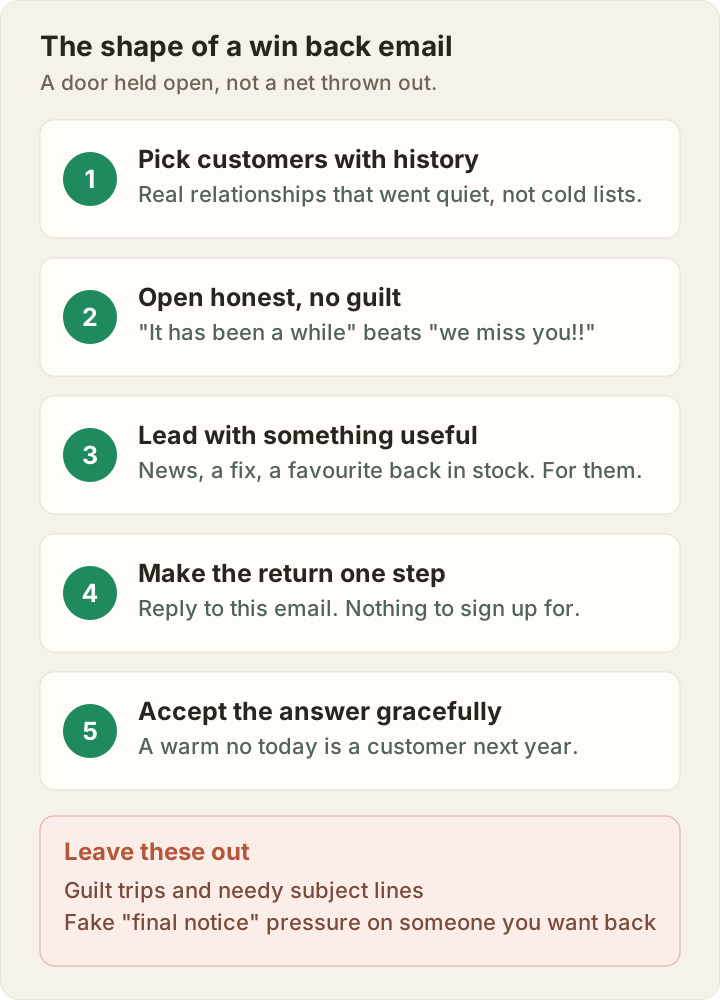
No guilt, no neediness, no fake urgency
Three tones sink these emails. Guilt, where the subject line mopes and the customer is made responsible for your feelings. Neediness, where the discount arrives before the hello and teaches everyone that leaving is how you earn rewards. And fake urgency, the "final notice" theatrics aimed at a person you are supposedly fond of. What works instead is the tone you would use running into them on the street: pleased, unbothered, specific. It has been a while, here is a thing you might care about, the door is open, no pressure either way.
And if you suspect something went wrong, ask outright. "Did we drop the ball somewhere?" gives the customer permission to say the thing they never complained about, whether that was a slow reply, a price rise or an order that arrived wrong. Some will tell you and return once it is fixed. Some will tell you and stay away, which is still free intelligence about a leak other customers are quietly slipping through. If the answer reveals a genuine mistake, the apology guide takes over from there.
The shape of it
Win back templates
Five angles for five situations. Swap the brackets, keep the specifics and send them one at a time, not as a blast.
Subject: It has been a while, [name]
Hi [name], I was going through our regulars this week and realised we have not seen you since [rough time]. No sales pitch, I just wanted to say hello and check all is well on your side. If life simply moved on, that is completely fine. If there was anything about your last experience with us that put you off, I would genuinely like to hear it, good or bad. Either way, the kettle is on whenever you are passing.
[Your name], [business]
Subject: The [product or service] you used to get is back
Hi [name], this made me think of you: [the specific thing, e.g. the roast you always ordered is back on the shelf / we now offer the evening slots you once asked about]. You were one of the people who [bought it most / asked for it first], which is why I wanted you to hear it from me rather than find out by accident in six months. If you would like [one, a slot, the details], just reply to this email and I will sort it. Lovely to have an excuse to write to you either way.
[Your name], [business]
Subject: Did we drop the ball, [name]?
Hi [name], you were a regular for [period] and then we stopped seeing you. I have been wondering whether that was us. If something went wrong, an order, a price, a reply that never came, I would honestly rather know than guess. You can be blunt, I promise it will be received as a favour. And if nothing went wrong and life just got busy, even better. Either way, thank you for all the business over the years. It was noticed and appreciated more than we probably said at the time.
[Your name], [business]
Subject: Shall I pencil you in, [name]?
Hi [name], by my diary you are overdue your usual [service], you normally come in around [interval] and it has been [longer]. If you have found somewhere closer or simply gone off it, no hard feelings at all. But if it just slipped, as these things do, reply with a day that suits and I will hold a slot before the [season] rush fills the book. Everything is as you left it, except [one small genuine improvement].
[Your name], [business]
Subject: Last note from us, [name]
Hi [name], I have written a couple of times without hearing back, which is an answer in itself and a perfectly fair one. This is the last note, I am not in the business of pestering people I like. If you ever want [the thing you provide] again, we are exactly where you left us and you will be welcomed back like no time passed. Thank you, sincerely, for the business you gave us. Wishing you well with whatever replaced it.
[Your name], [business]

When they come back and when they do not
A returning customer deserves a landing, not just a transaction. Greet the reply personally, honour whatever you offered without making them chase it and treat the first order back with the care of a first order ever, the same energy as a new client welcome. A won back customer who is then ignored churns twice and the second time is final. A few months after they settle back in, they are also the single best person to ask for a review, because "I left and came back" is the most persuasive sentence a stranger can read about a business.
And when the sequence ends in silence, let it end. Two or three notes over a couple of months, each with a different angle, then stop, genuinely. The mechanics of spacing the sequence are the same as any follow up after no response: patient, varied, finite. Customers respect a business that can take a hint. A surprising number reappear a year later precisely because leaving was allowed to be easy.
The email that never quite gets written
Here is the honest obstacle: this email sits on the to do list for months because it is nobody's emergency. The inbox is full of today's fires and "write something warm to thirty people who stopped buying" keeps losing to all of them. Then there is the tone problem, one draft reads needy, the next reads like a newsletter and the person you actually remember deserves neither. That is the job ReciteMail does: it learns your voice from emails you have already sent, then turns "warm note to Priya, she used to order monthly, stopped in spring, mention the new evening slots, no pressure" into a finished draft in seconds. Thirty lapsed customers becomes an afternoon habit instead of a guilty backlog. It runs on your PC, never connects to your inbox and your customer list stays on your machine. See who ReciteMail is for.
The cheapest customer you will ever acquire already knows where the door is. They trusted you once, they know the product and the address. All the hard work of the first sale is done. One honest email is the entire cost of asking them back.
Common questions
How long should you wait before contacting a lapsed customer?
Measure quiet against their own rhythm, not a calendar rule. A customer who ordered monthly and has missed three cycles is lapsed. A client who books annually is not lapsed until well past the year. As a rough guide, reach out at two to three missed cycles of whatever their normal pattern was. Earlier feels like surveillance, later means habits have formed elsewhere. The sweet spot is when the absence has become noticeable and the relationship is still warm enough that your name needs no introduction.
Should you offer a discount to win back a lost customer?
Not as the opener. Leading with money teaches customers that leaving earns rewards and it frames the relationship as a price negotiation, which a small business rarely wins. Open with the relationship instead: an honest check in, something new that suits them or a question about whether anything went wrong. If price genuinely was the reason they drifted, a gesture in the second email lands far better because by then it reads as generosity rather than desperation. Regulars come back for how it felt, not for ten percent.
Should you ask a lost customer why they stopped buying?
Yes. The asking is often the win in itself. A plain question, did we drop the ball somewhere, gives the customer permission to say the thing they never bothered to complain about: the late order, the price rise, the reply that never came. Some will tell you and come back once it is fixed. Some will tell you and not come back, which is still free intelligence about a leak other customers are quietly falling through. Either answer beats the silence you had before.
How many win back emails should you send before giving up?
Two, perhaps three, spread over one to two months, each with a different angle rather than the same nudge repeated. An honest check in, then something useful, then a graceful goodbye that makes clear you will stop. The goodbye email consistently outperforms the middle of the sequence because an easy exit is disarming. After that, stop meaning it. A customer who returns in a year to a business that respected their silence is worth ten pestered into unsubscribing.
The warm emails, actually sent
ReciteMail drafts win back notes, check ins and every relationship email in your own voice, learned from mail you have already sent. It runs on your PC, never connects to your inbox and your customer list never leaves your machine. Free for 7 days, no card needed.
Start your free trial