How to Ask Customers for Reviews: 6 Templates
Published 14 August 2026 · 7 minute read · The ReciteMail Blog
Unhappy customers review without being asked. Happy ones mostly do not. They meant to, they told you the soup was incredible, then life happened. Which means a review page left to run itself slowly fills with your worst days. The fix is not marketing. It is a one-line email sent at the right moment, often as the last step of an appointment rhythm that already runs on email. This is when to send it, the platform rules that get reviews deleted, plus six copy-paste templates for the ask.
Why the ask matters more than the service
Review pages are not a fair sample. The customer with a grievance has a motive to write. The delighted one has a warm feeling and a busy afternoon. Left alone, that imbalance quietly drags a good business toward an average rating that does not reflect reality.
Asking corrects the sample. It does not manufacture praise. It simply gives the silent majority the nudge and the link they were always one step short of. That is why the businesses at the top of your local results are almost never the ones with the best coffee. They are the ones who ask, every time, in a way that takes the customer thirty seconds. The most persuasive reviewer of all is the customer who left and came back, which is one more reason winning back a lapsed regular pays twice.

The rules before the templates
Asking for reviews is allowed everywhere. Google says so, Trustpilot says so and so does every other platform that matters. What gets businesses in trouble is how they ask. These lines are worth knowing because crossing them can get reviews removed, ratings suppressed or a profile suspended.
- No incentives. Ever. A discount, a freebie, loyalty points or an entry into a draw in exchange for a review breaks the rules on Google, Trustpilot and Yelp alike. In the United States the FTC treats paid-for reviews as a fineable offence. It makes no difference that you asked for "an honest review".
- No filtering by mood. Sending the review link only to customers you know are happy is called review gating and Google's policies name it explicitly. Everyone who buys gets the same ask.
- No quotas and no name-drops. Google's 2026 policy update added two more bans: setting review targets for staff and asking customers to mention a specific employee by name.
- No on-premises pressure. Handing someone a tablet at the till and waiting while they type is against the rules and it also produces the flattest reviews you will ever read.
What is still completely fine: a follow-up email or text after the sale, a review link in your email signature, on receipts and invoices, plus simply asking out loud whether they would mind sharing their experience online. Which is convenient, because the email version is also the one that works best.
The review ask, in order
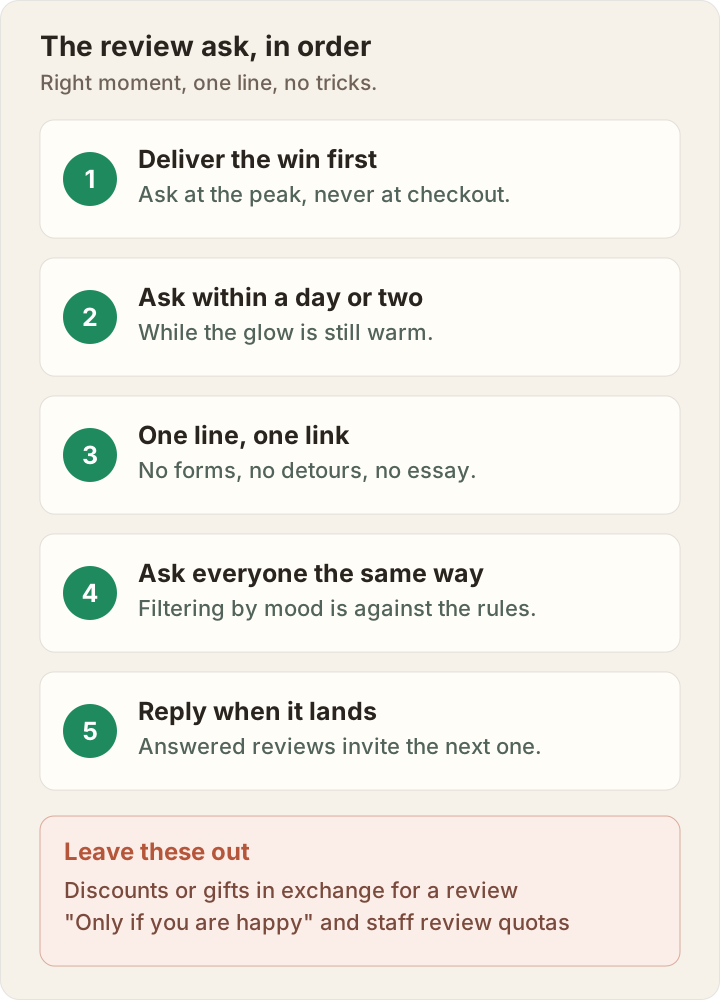
- Deliver the win first. Ask at the peak of the experience. For a store that is the day the parcel arrived, never the day the order was placed. For a service business it is the finished job. For a practice it is the resolved matter.
- Ask within a day or two. The glow fades fast. An ask inside 48 hours of the win converts several times better than the same words three weeks later.
- One line, one link. The ask is a sentence, the link goes straight to the review box and nothing else is in the email. Every extra paragraph and every extra click loses people.
- Ask everyone the same way. Same email, same link, whole customer list. It keeps you inside the rules and the occasional unhappy reply it surfaces is a complaint you get to fix in private instead of reading in public.
- Reply when it lands. A review page where the owner answers is a page that invites more reviews. The guide on responding to negative reviews covers the hard half of that habit.

Review request templates
Six templates for the asks that actually come up. Swap the bracketed parts, keep it to the one line where you can and never send two of these to the same person for the same purchase. If you find yourself sending the same ask twenty times a week, the guide on building a reply library turns it into a two-click habit.
Subject: How did we do?
Hi [name], I saw your [product] arrived this week and I hope it is exactly what you wanted. If you have thirty seconds, a quick review here would genuinely help a small business: [review link]. And if anything is not right, just reply to this email and I will fix it.
[Your name], [store name]
Subject: Thanks for having us
Hi [name], thanks again for choosing us for [the job]. It was a pleasure. If you were happy with how it went, a short review here would mean a lot: [review link]. Reviews are how most of our new customers find us. Every one counts.
[Your name]
Subject: That made our day
Hi [name], thank you for the kind words, I have passed them on to the team. Would you be willing to say the same thing where new customers can see it? It takes about thirty seconds: [review link]. No pressure at all and thank you either way.
[Your name]
Subject: A small favour
Hi [name], you have been ordering from us for a while now, which honestly means more than any single sale. If you have ever meant to leave us a review, this is the link: [review link]. A line from a long-time customer says more than anything we could write about ourselves.
[Your name], [business name]
Subject: One last nudge, promise
Hi [name], a week ago I asked whether you might leave us a quick review and I know these things slip down the list. Here is the link one more time in case the moment is better now: [review link]. Either way, this is the last you will hear about it and thanks again for your order.
[Your name]
Subject: A favour now the project is wrapped
Hi [name], now that [the project] is delivered and settled in, could I ask a small favour? A short review of how you found working with us would help the next business decide: [review link]. If you would rather give a private testimonial for our site instead, a couple of sentences by reply works just as well.
[Your name], [company]
What if the customer was not happy?
Sooner or later the ask lands on someone whose order went sideways and they reply to tell you. That reply is the system working. A complaint that arrives by email is one you can fix quietly, which is a far better outcome than the same words appearing under your business name in public. Fix it properly, then leave it. Do not circle back to ask for a review of the rescue. If they are delighted with how you handled it, they know where the link is.
What you must not do is design for this: sending a "how was it?" email first and only revealing the review link to the people who answer positively. That two-step filter is exactly the review gating the platforms prohibit. One ask, whole list, then let the replies fall where they fall.
The habit that makes the reviews arrive
Nobody forgets to ask in week one. They forget in week nine, when the day is full and writing even a two-line email to every customer feels like one job too many. The businesses with five hundred reviews are not more charming than you. They just never skip the ask, because the ask costs them seconds.
That is the job ReciteMail does. It learns your voice from emails you have already sent and drafts the ask, the thank-you and the reply to whatever comes back, each one sounding like you rather than a mail merge. The review request for customer four hundred reads as warm as the one for customer four. You read every draft, press send and get back to the actual work.
The ask and the reply are one system. Asking fills the page and replying keeps it healthy. When a harsh one lands in between, the negative review templates handle the public side and the apology email templates handle the private repair.
Common questions
Is it against the rules to ask customers for Google reviews?
No. Asking is allowed and Google says so plainly. What breaks the rules is how some businesses ask: offering discounts or gifts in exchange for a review, only sending the link to customers you know are happy, setting review quotas for staff or pressuring people to review while they are still on the premises. Ask everyone, offer nothing in return and the ask itself is fine.
When is the best time to ask for a review?
Within a day or two of the moment the customer got what they wanted. For a store that is delivery, not checkout. For a service business it is the finished job. For a practice or agency it is the resolved case or the delivered project. Ask at the peak of the experience while it is still fresh. A request three weeks later lands as a chore.
Can I offer a discount or freebie for leaving a review?
No. Google, Trustpilot and Yelp all prohibit incentivised reviews and in the United States the FTC can fine businesses for buying them. It does not matter whether you ask for a positive review or just any review. If anything of value changes hands, the review breaks the rules and can take your profile down with it.
How many times can I follow up a review request?
Once. Send the ask, then one gentle nudge a week or so later if nothing happened. After that let it go. Reviews written under social pressure read flat anyway and a customer who feels pestered is one bad experience away from writing a very different kind of review.
Ask every customer, in your own voice
ReciteMail drafts the review ask, the thank-you and every reply in the way you actually write, learned from your own sent mail. It runs on your PC, never connects to your inbox and nothing sends without you. Free for 7 days, no card needed.
Start your free trial