How to Tell a Customer You Are Fully Booked: 6 Templates
Published 31 August 2026 · 8 minute read · The ReciteMail Blog
Being fully booked is the problem every business wants and it comes with a trap. The enquiry you cannot take still deserves a reply and that reply decides where the customer goes next: onto your list for the 14th or onto a competitor's books forever. Most "sorry, we're slammed" emails choose the second option without meaning to, because they close the door instead of holding it open. Here is the shape of a no that keeps the customer, when a waitlist actually works, plus six copy-paste templates.
Full is a good problem. Say it like one.
The instinct when turning work away is to apologise and apology is the wrong note. A diary with no room is proof that other people trust you, which is precisely the thing a new customer is trying to find out. "I'm booked solid until the 12th" is not bad news delivered well. It is a quiet credential. Scarcity reads as quality in every trade there is and the customer who hears a confident, helpful "not yet" often wants you more, not less.
What ruins it is vagueness and silence. "We're really busy at the moment" gives the customer nothing to plan around. So they do the only sensible thing and ring the next name on the list. And the enquiry that sits unanswered for four days because you were too busy to reply is the most expensive kind of busy there is: the same four days that filled this month's diary quietly emptied next month's. The reply itself can be three sentences. It just has to come quickly and end with a date. That urgency logic runs the other way too, which is why the rush job reply is this email's mirror image: there the customer's diary is the one on fire.

The shape of a fully booked reply
Every good version runs the same five moves, whether you cut hair or fit kitchens.
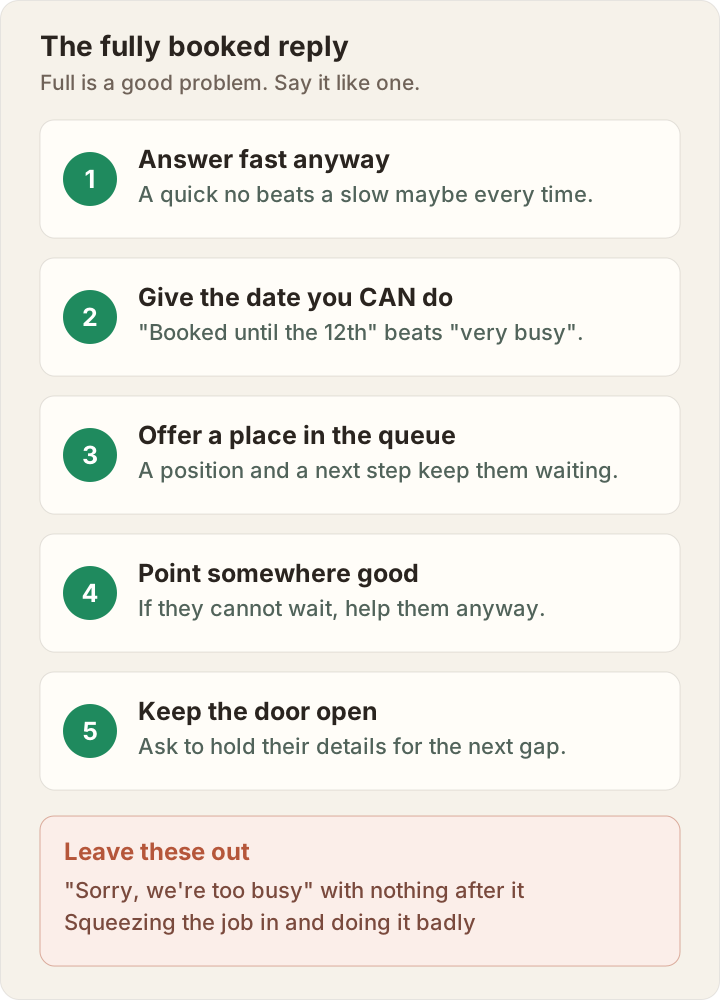
- Answer fast anyway. A quick no beats a slow maybe. The customer can work with "not until March". They cannot work with silence and they will not wait around inside it.
- Give the date you can do. Never "very busy right now". Always "my next opening is Tuesday the 12th". A concrete date converts your no into an option.
- Offer a place in the queue. A waitlist works when the customer knows two things: roughly where they stand and what happens next. Offer both in one sentence.
- Point somewhere good. When they truly cannot wait, recommend someone whose work you rate. The job was leaving anyway. Whether the customer leaves impressed is still up to you.
- Keep the door open. Ask to keep their details for the next gap. Half of "can't wait" customers can wait perfectly well once they know the date and feel remembered.
The mistakes that turn full into gone
- The bare no. "Sorry, we're too busy to take this on" with nothing after it reads as "go away". The customer obliges, permanently.
- The humble-brag essay. Two paragraphs about how overwhelmed you are is not a credential. One clean line about the next available date is.
- Squeezing it in anyway. Overbooking to avoid a no means doing the new job badly and the promised ones late. One honest "not until the 12th" protects every customer you already have. When saying yes would mean missing dates you have promised, that conversation is far worse than this one.
- The ghost waitlist. Taking names and never contacting them is worse than no list. Every gap that opens should trigger a message the same day.
- Slow replies to new enquiries. "I'll reply when things calm down" is how this month's full diary becomes next month's empty one. Three sentences now beat a page next week.
Fully booked email templates
Six templates for the ways this actually lands in an inbox. Swap the brackets, keep the dates real and keep the tone of someone whose problem is demand, not desperation.
Subject: Re: [their enquiry]
Hi [name], thanks for getting in touch, this sounds like a job we'd enjoy. I'll be straight with you: we're fully booked until [date] so the earliest I could start is [date or week]. If that works, reply and I'll pencil you in now so the slot is yours. If you need it sooner than that, say so and I'll point you towards someone good rather than leave you stuck.
[Your name], [business]
Subject: Re: [their enquiry]
Hi [name], thank you for asking and I'm sorry to say the diary is full through [period]. What I can offer is our cancellation list: you'd be [position, e.g. third] on it and gaps do open up most weeks. When one does, I email or text you first and you have until [e.g. the end of that day] to claim it before it goes to the next person. Otherwise your guaranteed option is [first regular date]. Want me to add you to the list, book the [date] or both?
[Your name], [business]
Subject: A [day] slot has just opened up
Hi [name], good news: a spot for [service] on [day, date, time] has just come free and you're next on the list. Reply or call by [deadline] and it's yours. If the time doesn't suit, no problem at all, you'll stay at the top of the list for the next one.
[Your name], [business]
Subject: Re: [their enquiry]
Hi [name], I wish the timing were different because this is exactly the kind of work we do. We're committed through [period] and your [deadline or event] clearly can't wait for us. Rather than leave you searching, try [name] at [business], [phone or email]. Their work is genuinely good, I'd trust them with my own [house/hair/accounts]. And if anything changes on your timing, come straight back to me, I'd be glad to have you in the book.
[Your name], [business]
Subject: Re: [their request]
Hi [name], for you I've looked twice at the diary and it's genuinely wall to wall until [date], which I'm sorry about. Two options. I can book you the first proper slot on [date] right now or if it's urgent I'll put you at the very top of the cancellation list and you'll hear from me the moment anything moves, usually within the week. You've been coming to us for [time] and I'd much rather juggle for you than have you go elsewhere so tell me which you'd prefer.
[Your name], [business]
Subject: [Project]: earliest start and how to hold it
Hi [name], thank you for the detail, this is a project we'd be proud to take on. Our current jobs run until [date] so the earliest realistic start is [date] and I'd rather give you that honestly than promise sooner and let you down. If the timing works, a deposit of [amount] holds the slot and I'll get the full quote over this week so everything is agreed long before we begin. Good work is worth a short wait and we'll make it worth yours.
[Your name], [business]
Make the waitlist earn its keep
A waitlist is only as good as the machine behind it and the machine is simple. Every cancellation or no-show triggers template 3 to the top name the same day, with a claim deadline so an unanswered message never blocks the queue. That single habit turns the two biggest leaks in a service diary, empty slots and turned-away demand, into each other's solution. It also quietly builds next quarter's pipeline: everyone on the list already wants you, which makes them warmer than any lead an advert will ever bring. And if the list keeps growing while the diary stays full for months, that is not an email problem. That is your clearest signal that the price needs to go up.
The tenth "we're full" email this week
One graceful fully booked reply is easy. The tenth this week, written between jobs on a phone, is where the bare "sorry, we're slammed" comes from. Not rudeness. Exhaustion. Which is exactly backwards, because the weeks you are most swamped are the weeks the replies matter most: every enquiry you fumble now is a hole in the diary two months out, the quiet reason busy seasons are so often followed by slow ones.
That is the job ReciteMail does. It learns how you write from emails you have already sent, then turns a one-line note like "full till the 12th, offer waitlist spot 3, else recommend Dave's Joinery" into a warm, complete reply that sounds like you rather than an autoresponder. Ten of those takes minutes, not an evening. And because it runs on your own machine and never connects to any mailbox, your customers' details stay exactly where they are.
Trades, salons and clinics live this weekly. Fully booked replies, rush job answers, no-show follow-ups and quotes are the same dozen emails at volume, each deciding whether a customer stays. ReciteMail drafts all of them in your voice, private by architecture because it never connects to a mailbox. See ReciteMail for trades and ReciteMail for clinics.
Common questions
How do you politely tell a customer you are fully booked?
Reply quickly, thank them for asking and give the first real date you could take the work rather than a vague "we are very busy". A concrete date turns your no into an option they can plan around. Then give one clear next step: hold the date, join the waitlist or take a recommendation if they cannot wait. Customers rarely mind that you are full. They mind being left with nothing to do about it.
Should you run a waitlist when you are fully booked?
Yes, if you actually work it. A waitlist keeps demand you would otherwise lose and it pairs perfectly with cancellations and no-shows: every gap in the diary gets refilled from the list instead of sitting empty. The rules that make one work are simple. Tell people roughly where they stand, tell them what happens next and contact them the moment a slot opens with a deadline to claim it. A waitlist nobody ever hears from again is worse than no waitlist at all.
Should you recommend a competitor when you cannot take the job?
When the customer genuinely cannot wait, yes. It feels like handing away money and it almost never is: the job was leaving anyway so the only question is whether the customer leaves impressed or empty-handed. A good recommendation makes you the person who helped even when there was nothing in it for you, which is exactly who people return to and talk about. Keep a shortlist of one or two peers whose work you would put your own name near.
Is being fully booked bad for business?
Handled well it is the best marketing you have, because scarcity reads as quality and a confident "booked until" date signals a business in demand. Handled badly it quietly leaks future revenue: every enquiry answered late or with a bare sorry is a customer who books elsewhere and stays there. Consistently full for months is also your clearest pricing signal. If the diary never has a gap, the price is too low.
Every enquiry answered, even in your busiest week
ReciteMail drafts fully booked replies, waitlist updates and every recurring customer email in your own voice, learned from mail you have already sent. It runs on your PC, never connects to your inbox and customer details never leave your machine. Free for 7 days, no card needed.
Start your free trial