Trade Show Follow Up Emails: Beat the 48 Hour Window (5 Templates)
Published 26 August 2026 · 8 minute read · The ReciteMail Blog
The stand is packed away, your feet hurt and on the passenger seat sits the real prize of the whole expensive weekend: a pile of business cards and scanned badges. Here is the uncomfortable truth about that pile. It is worth a fortune tonight, half as much on Thursday and almost nothing in two weeks, because the people behind those cards met forty other suppliers and their memory of your conversation is evaporating by the hour. The follow up email is where trade shows are actually won. Here is how to send ones that get answered: the 48 hour rule, sorting the pile before you sleep, opening with the conversation instead of a greeting, plus five templates to copy.
The pile is a melting asset
The numbers on this are blunt. Leads contacted within 24 hours of an event convert at several times the rate of leads contacted later, while response rates fall off a cliff once you pass 48 hours. That is not because people stop needing what you sell. It is because recall of a specific booth conversation fades within two days. Once "the packaging supplier with the clever samples" becomes "some company from the show", your email competes with every other exhibitor's instead of continuing a conversation only you two had.
There is a second clock too: everyone else's follow up. The generic "great to meet you at the show!" emails flood in on Monday and Tuesday, then inboxes glaze over. Which creates the opening. An email that arrives fast and sounds like a person continuing a real chat cuts through that flood precisely because it does not look like part of it.
Sort the pile the same evening
Before any email gets written, the pile needs triage. It has to happen the same evening or on the journey home, while faces still attach to cards. Three stacks:
- Hot. A real need, a real conversation, maybe a promise made: "send me a price for 500 units". These get a personal email within 24 hours, ideally before their first morning back at a desk.
- Warm. A genuine chat, interest without urgency. Personal email inside 48 hours, referencing what you talked about.
- Cold. Badge scans, sweet grabbers, polite drive bys. One light note or honestly nothing. The time saved here funds the personalisation above.
The scribbles you made on card backs during the show are the most valuable words of the weekend. "Lavender line, supplier trouble, dog called Ozzy" is a follow up email that writes itself. If you did not scribble this time, that is the habit to build for the next show.
The shape of the follow up
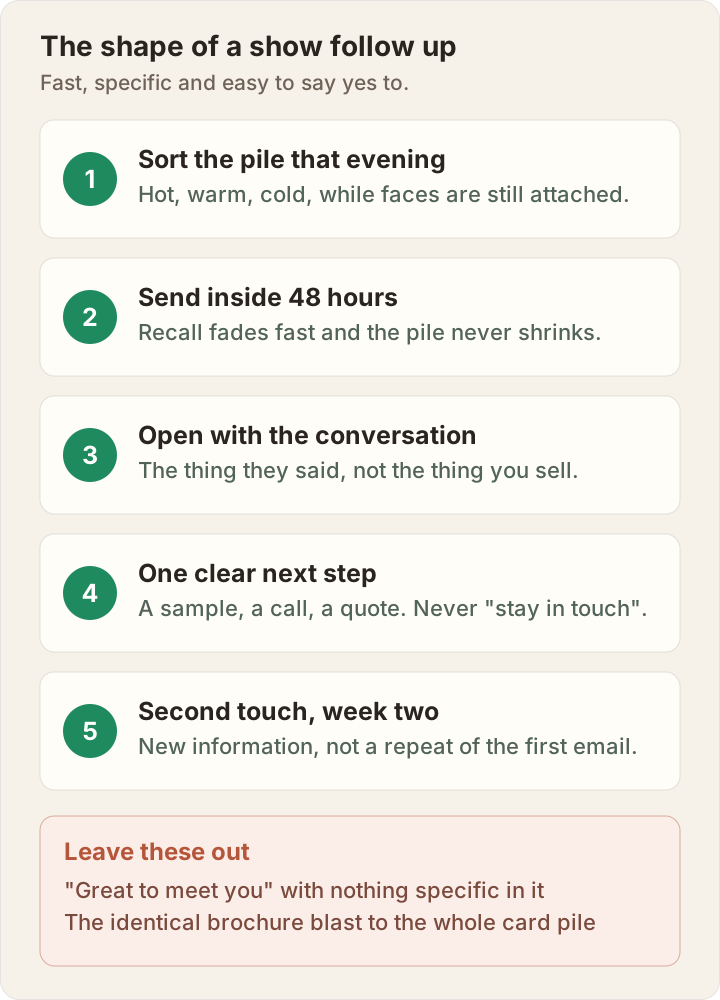
The single most important line is the first one. The rule is simple: open with the thing they said, not the thing you sell. "You mentioned your current supplier keeps missing your seasonal deadlines" proves the conversation happened, restarts it mid flow and instantly separates you from the brochure blasts. Then one clear next step a busy person can take in ten seconds: a sample to post, a call to book, a quote to confirm. "Let's stay in touch" is not a next step, it is a goodbye wearing a name badge.
Trade show follow up templates
Five for the situations the pile actually contains. Swap the brackets and let the card back scribbles fill the personal details.
Subject: The [product] numbers you asked for at [show]
Hi [name], good talking at [show]. As promised, here are the numbers before the week swallows us both. For the [what they asked about, e.g. 500 unit run] you are looking at [price], including [what matters, e.g. delivery and the custom labelling you mentioned]. You said [their situation, e.g. the current supplier keeps slipping on seasonal deadlines], which makes it worth saying plainly: our lead time is [X weeks] and we hold it. If the numbers work, reply and I will get a formal quote over the same day. Good luck with the post show pile.
[Your name], [business]
Subject: [The specific topic] from [show]
Hi [name], we spoke at [show] on [day], I was the one [the memorable hook, e.g. with the walnut sample boards]. You mentioned [the thing they said]. It stuck with me because [one genuine sentence of relevance]. No pitch here, just one useful thing: [the useful thing, e.g. the spec sheet for the range you liked, attached]. If it is worth a proper conversation, I am happy to [the light next step, e.g. send a sample box to the shop]. Either way, enjoyed the chat.
[Your name], [business]
Subject: Before I forget, from [show] today
Hi [name], writing this from the train home so the day does not blur it. Great conversation about [the topic] at our stand. You asked for [what they asked for] and you will have it properly by [named day]. This note is just so you have my details and I have yours. Talk [day].
[Your name], [business]
Subject: Re: [original subject]
Hi [name], following on from my note after [show] with one new thing rather than a nudge: [the new thing, e.g. the sample box shipped this morning, tracking below / we just did a run very like the one you described, photo attached]. The [original offer] still stands as quoted. If the timing is wrong this season, tell me and I will come back when it suits, no chasing in between.
[Your name], [business]
Subject: Re: [original subject]
Hi [name], last note from me on this one. I know the weeks after a show are chaos. No hard feelings at all if this landed in the wrong season. The door stays open: the [offer] holds until [date]. After that, you are always welcome to pick it back up whenever the need from our chat resurfaces. Wishing you a strong quarter either way.
[Your name], [business]
The maths nobody does on the way home
A stand at a decent show costs four figures before you count the days out of the business. Divide that by the number of genuinely warm conversations, often twenty or thirty. Each one cost you somewhere between 50 and 200 euro to have. That is the number to hold in mind when the follow up pile feels optional on a tired Thursday. Skipping ten follow ups is quietly shredding a four figure investment. The show does not refund the difference.
The follow up is also only round one. The lead that replies becomes a price conversation or a proper quote, the quote that goes quiet gets the rhythm from the follow up guide. The yes becomes a welcome email. Each handover is somewhere leads leak. Tighten the whole chain and the same show produces visibly more customers than it did last year.
Forty personal emails on tired legs
Here is where the good intentions die: writing one personalised follow up is pleasant, writing forty on the Tuesday after a show, around the backlog the show created, is a slog that turns personal notes into a paste job. That is the job ReciteMail does. It learns your voice from emails you have already sent, then turns the card back scribble, "Sarah, lavender line, supplier misses seasonal deadlines, send 500 unit price, warm", into a finished personal email in seconds. Forty tailored follow ups become an hour's work on the first morning back, inside the window while the conversations are still warm. It runs on your PC, never connects to your inbox and nothing sends without you. See who ReciteMail is for.
The show is the introduction. The inbox is the relationship. Everyone at that hall shook the same hands. The supplier who wins the account is almost never the one with the flashiest stand. It is the one whose email arrived first, remembered the conversation and made the next step effortless.
Common questions
How soon after a trade show should you follow up?
Within 48 hours and within 24 for the hottest conversations. Recall of a specific booth chat fades sharply after two days and the person you met is receiving a flood of identical follow ups in the same window. Industry data consistently shows leads contacted inside 24 hours convert at several times the rate of ones contacted later. If the full email needs time, a two line same day note that references the conversation and promises the details by a named day holds your place in their memory.
What should the first line of a trade show follow up say?
The thing they told you, not the thing you sell. Great to meet you at the show opens every competitor's email in their inbox that week. You mentioned your packaging supplier keeps missing your seasonal deadlines opens exactly one, yours. The scribble on the back of their business card is the most valuable asset you brought home. One specific detail proves the conversation happened and earns the next paragraph.
Should you send the same follow up to every lead from the show?
No, sort the pile first. The same evening, while faces still attach to cards, split it three ways. Hot leads with a real need get a personal email inside 24 hours with a concrete next step. Warm conversations get a personalised note inside 48 hours. Cold badge scans and polite chats get a light one time note or nothing at all. One tailored email to a hot lead is worth more than fifty identical brochure blasts. The blast actively harms you with the leads who mattered.
How many times should you follow up after a trade show?
Two or three touches over about two weeks, each adding something new. The first email lands inside 48 hours with the conversation and a next step. The second, about a week later, brings new information: the sample shipped, the case study they asked about, a price for the volume they mentioned. A final brief note closes the loop and leaves the door open. What kills goodwill is repetition, the same just checking in message on a loop. Every touch should give them a fresh reason to reply.
Forty follow ups before the leads go cold
ReciteMail drafts personal follow ups, quotes and every repeating business email in your own voice, learned from mail you have already sent. It runs on your PC, never connects to your inbox and your lead list never leaves your machine. Free for 7 days, no card needed.
Start your free trial