How to Respond to a Discount Request: 6 Polite Email Templates
Published 18 August 2026 · 8 minute read · The ReciteMail Blog
"Is there any movement on the price?" Seven words and suddenly the deal you were happy with feels wobbly. Most businesses answer badly in one of two directions: they fold instantly and give away margin nobody demanded or they bristle and answer so stiffly the customer walks. There is a calmer third path. Here is when to hold and when to trade, the five-part shape of a reply that protects the price without bruising the person, plus six copy-paste templates from the straight decline to the customer waving a cheaper quote.
What a discount request actually is
Here is the reframe that makes every reply easier to write: most discount requests are not demands, they are questions. The customer is asking "is this price real?" Some people ask out of habit, because it costs nothing. Some were told to ask by a partner or a boss. A few are genuinely at the edge of their budget. Almost none of them expect an automatic yes and plenty of them, having asked, will happily pay full price if the answer is a confident, friendly no.
Which means the biggest mistake is not the wrong answer, it is the wrong energy. A flustered reply, a defensive reply or a three-day silence while you agonise all say the same thing: the price is soft. A warm, prompt, unbothered reply says the opposite. And that matters beyond this one deal, because the customer who extracts an easy discount remembers, repeats it next time and mentions it to friends. The first discount you give away for nothing is rarely the last.

Hold or trade: the one decision that shapes the reply
Before writing anything, decide which of two replies this is. Hold means the price stands and your job is to say so kindly, once, with the value restated and a door left open. This is the right answer for one-off retail asks, habit hagglers and any request with nothing offered in return. Trade means you are open to moving but only in exchange for something real: a larger order, payment up front, a longer commitment, a flexible delivery slot, a referral or testimonial. Trading keeps the price meaningful because the number only moves when the deal itself changes.
What should never happen is the third thing: the gift, a discount handed over purely because somebody asked. It buys nothing, teaches everything and quietly reprices your whole business one nice customer at a time. If your first number was honest, defend it the way a good quote defends itself: by explaining what it buys.
The shape of the reply
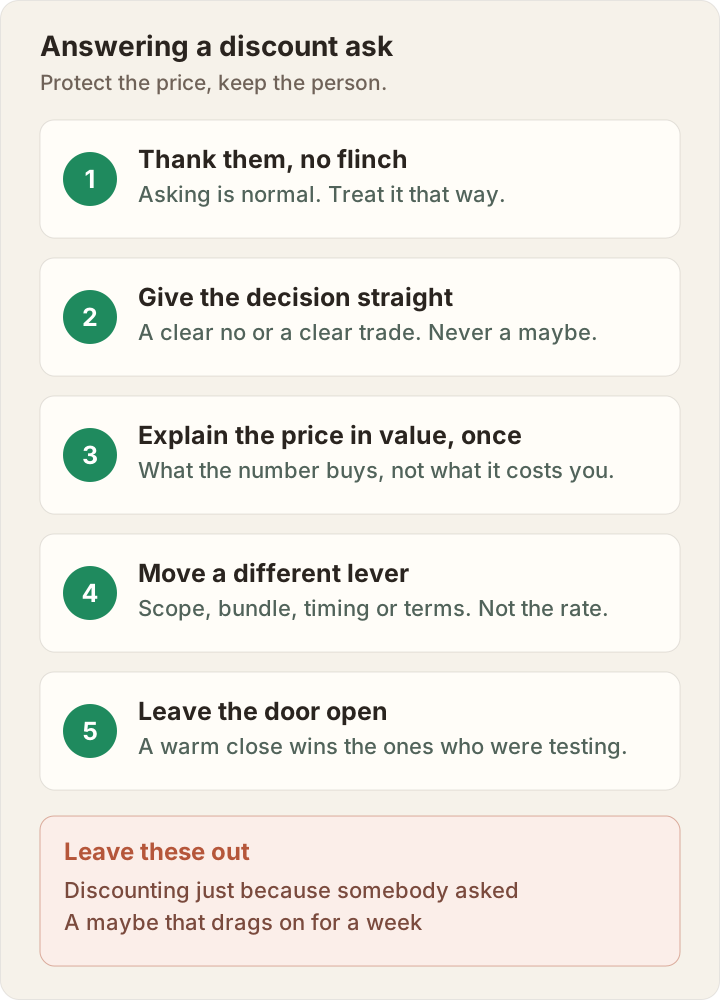
- Thank them, no flinch. Asking is normal business behaviour. Treat it as such and the temperature stays low.
- Give the decision straight. The answer lives in the first two lines: the price stands or here is the trade. A maybe that drags for days reads as a yes being slowly negotiated.
- Explain the price in value, once. What the number buys: materials, guarantee, turnaround, experience. Not your costs, not an apology. Once, then stop defending.
- Move a different lever. If they genuinely cannot reach the price, change the deal instead of the rate: smaller scope, staged payments, a bundle, a later slot. It solves their budget without repricing your work.
- Leave the door open. A warm close keeps the ones who were only testing and leaves the genuinely constrained a way back when budget allows.
Discount reply templates
Six templates covering the asks that actually arrive. Swap the brackets, keep the warmth and give the decision early. The tone to aim for: pleased they asked, entirely unbothered, obviously fair.
Subject: Re: [their subject]
Hi [name], thanks for asking straight out, I appreciate the directness. The honest answer is that [price] is the real price rather than an opening one. That means I cannot take it lower. It covers [two or three concrete things: the materials, the guarantee, the turnaround], which is exactly where I would rather not cut corners on your job. If the number works, I would love to go ahead and I will make sure you feel it was worth every bit. Either way, thanks for considering us.
[Your name], [business]
Subject: Re: [their subject]
Hi [name], thank you for being open about the budget, that genuinely helps. I cannot bring the price down for the full version, because it was priced honestly the first time. What I can do is fit the work to [their budget]: [concrete option, e.g. leaving out X for now or phasing Y to next quarter] brings it to [revised amount]. Same quality on everything included, just a tighter scope. If that shape works, say the word and I will send the revised quote today.
[Your name], [business]
Subject: Re: [their subject]
Hi [name], I can move on the price if we can shape the deal so it makes sense on both sides. [The trade, e.g. If you take all three units, I can do the set at X. / If you are happy to pay up front, I can take Y off. / On a twelve-month arrangement rather than monthly, the rate drops to Z.] That way you get a better number and I get [the honest benefit: certainty, volume, a filled slot]. If none of those fit, the standard price stays available with no hard feelings. Which way suits you?
[Your name], [business]
Subject: Re: [their subject]
Hi [name], thanks for the interest and fair play for asking. We keep one price for everyone, including people who do not ask, which I suspect is part of why customers trust our quotes. So I cannot start the relationship with a discount. What I can promise is what the price buys: [the two or three things that matter]. If you would like to try us at lower risk, [genuine small option, e.g. start with the smaller package / a single unit] and see how we do. I think the full job will feel fairly priced by the end of it.
[Your name], [business]
Subject: Re: [their subject]
Hi [name], coming from you this deserves a proper answer, because [true acknowledgement, e.g. three years of orders means a lot to a business our size]. I am going to hold the price, because it is the same honest number I charge everyone and I never want you wondering whether earlier years were padded. But loyalty should be worth something real. Here is what I can do instead: [concrete non-rate value, e.g. priority booking whenever you need us, the extended guarantee at no charge, first pick when new stock lands]. You get more than anyone else does. The price just is not the lever I use to say thank you.
[Your name], [business]
Subject: Re: [their subject]
Hi [name], thanks for telling me rather than just going quiet. A cheaper quote usually means a different job. It is worth checking what theirs includes. Ours covers [the concrete scope: materials spec, guarantee, timeline, what happens if something goes wrong]. If theirs covers the same, they may simply be the right choice for you and I will say so without hard feelings. If it does not, the gap is the difference in the job, not the margin. Happy to walk through both quotes line by line if useful. If you go ahead with us, the price stands exactly as quoted.
[Your name], [business]

The asks that follow the ask
Answer one discount request well and two sequels often arrive. The re-ask, "surely you can do something", gets the same answer in fewer words: warm, identical, unmoved. Consistency is the whole message the second time. And the silence, where the customer goes quiet hoping you will crack first, gets a normal follow-up that cheerfully assumes the deal is still on at the quoted price. What never gets sent is the panicked "okay fine, ten percent off" into the silence. That email converts a probably-won deal into a definitely-cheaper one. The same spine runs through saying no well generally and through defending a price rise: decision first, one honest reason, warmth throughout.
Why these replies go out wrong at 5pm
Nobody fumbles a discount reply because they do not know their own prices. They fumble it because the email lands at the end of a long day, the customer matters, the wording feels loaded and the safe move is to soften. Ten minutes of hedging later, a "let me see what I can do" goes out and the price is already lost. The hard part was never the decision. It was writing the decision kindly at speed.
That is the job ReciteMail does. It learns your voice from emails you have already sent, then turns a one-line note like "hold the price with Jordan, warm, offer the phased option at 1800 if budget is tight" into a complete, confident reply that sounds like you on a good day. The re-ask takes thirty seconds to answer identically. And because it runs on your own machine and never connects to your inbox, your pricing conversations stay exactly where they belong: on your desk. See who ReciteMail is for.
A price defended kindly is a price believed. Customers do not resent a no nearly as much as they resent discovering someone else paid less. Every calm, consistent reply in this post is also a promise to every customer who never asked: the number on the quote is the number, for everyone.
Common questions
Should you ever just give the discount?
Only when you get something real in return: a bigger order, payment up front, a longer commitment, a quieter delivery window. A discount granted purely because somebody asked teaches that customer and everyone they talk to that your first price is an opening bid. Trade, do not gift. If the request comes from genuine hardship and you want to help, frame it as a one-time gesture with a named reason so it cannot become the new price.
How do you decline a discount request without losing the sale?
Thank them, give the decision in the first two lines, explain the price once in terms of what it buys, then move a lever that is not the rate: a smaller scope, a bundle, staged payments or a different start date. Most askers are not demanding a lower price, they are checking whether the price is real. A calm, warm, immediate no with an alternative answers that question and keeps the relationship intact.
What do you say when a loyal customer asks for a discount?
Acknowledge the loyalty as real and reward it with something other than a lower rate: priority scheduling, an extended guarantee, a bundled extra, first access to new stock. Cutting the price for loyalty converts your best relationship into your worst margin and quietly tells them the years of full price were overcharging. Value the history in a currency that does not reprice the work.
How do you respond when they say a competitor is cheaper?
Do not rubbish the competitor and do not panic-match. Ask what the cheaper quote includes, because most price gaps are scope gaps: different materials, no guarantee, longer lead time, items excluded. Then restate what your number covers and let the customer compare like for like. If they still choose on price alone, let them go graciously. Matching a stripped-down quote with your full-service costs is how profitable work becomes unprofitable.
Price conversations, answered in your voice
ReciteMail drafts discount replies, quote defences and every other loaded email in your own voice, learned from mail you have already sent. It runs on your PC, never connects to your inbox and your pricing stays on your machine. Free for 7 days, no card needed.
Start your free trial