Sorry for the Late Reply: How to Recover a Late Email (8 Templates)
Published 17 August 2026 · 8 minute read · The ReciteMail Blog
Somewhere in your inbox right now there is an email you are avoiding, not because the answer is hard but because it has been sitting there too long. Every day it ages, the imagined apology grows and the reply gets harder to start. Here is the way out: when a late reply actually needs an apology, the five-part shape that recovers one gracefully, plus eight copy-paste templates covering everything from two days late to the one you found two months later at the bottom of the pile.
The guilt spiral, explained
A late email gets harder to answer at a rate the original message never deserved. Day two, you could still just reply. Day five, you feel the reply now needs an apology attached. Day twelve, the apology feels like it needs an explanation. Day thirty, the whole thing feels like it needs a ceremony. So it gets nothing at all. The task never grew. Only the dread did.
Here is the fact that breaks the spiral: the other person is running the same overflowing inbox you are. In almost every case they have thought about your silence far less than you have. What they want is not a beautifully constructed apology. It is their answer. Which means the recovery is nearly always simpler than the dread suggested: one plain sentence of apology, then the useful reply they were waiting for. The email you have built up for a fortnight takes four minutes to write once you accept how short it should be.

First, check you owe an apology at all
A surprising share of "sorry for the late reply" emails are apologising for nothing. Answering a routine email within two working days is normal professional speed, not lateness. If you open every second reply with an apology, two bad things happen: you train people to expect instant answers from you and you spend the phrase down to nothing. It carries no weight on the day you are genuinely, damagingly late.
Save the apology for real lateness. A week or more on something routine. Any delay past a deadline you set yourself. A message that clearly expected same-day speed, like a customer mid-problem. For everything faster than that, either skip the apology entirely or swap it for gratitude: "Thanks for your patience" frames the same fact around their generosity instead of your failure and reads warmer at the same time.
The shape of a late reply
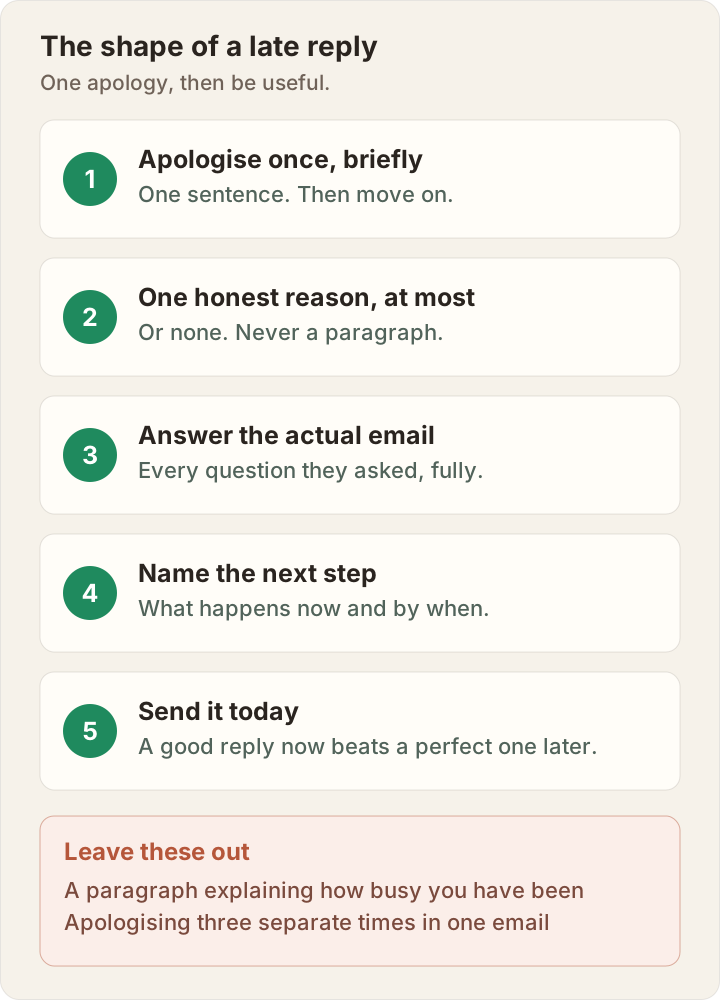
- Apologise once, briefly. One sentence at the top. Not three variations of it spread through the email, which turns a reply into a confession.
- One honest reason, at most. "I was away last week" or "this got buried in a heavy fortnight" is plenty. (And if away is a regular feature, an honest out of office prevents the apology being needed at all.) Often no reason reads best of all. The moment the explanation becomes a paragraph, the email is about you instead of them.
- Answer the actual email. Fully. Every question they asked, in order. A late reply that also only half-answers is two failures in one message.
- Name the next step. What happens now and by when. A concrete date is how you show the lateness was an exception, not a preview.
- Send it today. The version you send now, slightly imperfect, beats the polished version that waits another week. Lateness compounds. Answers do not need to be beautiful, they need to arrive.
Late reply templates
Eight templates, ordered roughly by how late you are. Swap the brackets, keep the apology to its one sentence and let the answer do the repairing.
Subject: Re: [their subject]
Hi [name], apologies for the slow reply. On your question: [the full answer]. If it helps to talk it through, I am around [availability]. Anything else you need on this, just ask.
[Your name]
Subject: Re: [their subject]
Hi [name], I am sorry this took me so long to answer. It deserved a faster reply. Here is where things stand: [the full answer, with each of their questions addressed]. To make up some of the lost time, I have already [something you have done, e.g. checked the dates / started the document]. You will have [the next thing] from me by [date].
[Your name]
Subject: Re: [their subject]
Hi [name], this reply is far later than it should be and I am sorry. No elaborate excuse: your email deserved better handling than it got from me. If the question is still live, here is my answer: [the full answer]. If things have moved on since you wrote, tell me where they stand now and I will pick it up from there properly. Either way, thank you for your patience with this one.
[Your name]
Subject: Re: [their subject]
Hi [name], I have just found your email from [date] and I am sorry it went unanswered. It slipped past me completely rather than being ignored, for what that is worth. Answering it now: [the full answer]. I have also [the fix, e.g. flagged your address so this cannot happen again]. If you found the answer elsewhere in the meantime, apologies for the wait all the same.
[Your name]
Subject: Re: [their subject], my apology
Hi [name], I owe you a proper apology. Because my reply was late, [the concrete consequence, e.g. you missed the early rate / the order went out without the change]. That is on me, not on you for failing to chase. Here is what I am doing about it today: [the concrete remedy]. And so it does not happen again, [the change you have made]. If there is anything the delay caused that I have missed, tell me and I will put that right too.
[Your name]
Subject: Re: [their subject]
Hi [name], thanks for your patience on this one. I wanted to give you a considered answer rather than a fast one, because [the reason it needed thought, e.g. it affects the whole quarter]. Here it is: [the full answer]. Happy to walk through the reasoning if useful.
[Your name]
Subject: Re: [their subject]
Hi [name], got this, thank you. It needs a proper look rather than a quick guess. I want to check [the thing] before answering. You will have a full reply from me by [specific day]. If it is urgent before then, call me on [number].
[Your name]
Subject: Re: [their subject]
Hi [name], thank you for bearing with us and I am sorry you had to wait this long for an answer. You asked about [their issue] and here is where it stands: [the full answer, with anything already done]. Your next update from us lands by [date] without you needing to chase. If anything about this is not right, reply here and it comes straight to me.
[Your name], [business]

Do not let sorry become your house style
Watch a week of your own sent folder. If "sorry for the delay" opens more than a couple of messages, the phrase has stopped being an apology and become a verbal tic, one that quietly tells everyone your default is lateness. The fix is not better apologies. It is two structural habits. First, the holding reply: template seven takes thirty seconds, buys you days honestly and means nothing you send afterwards is late at all. Second, honest promise dates: say Friday when you mean Friday, not "shortly". That leaves a line you visibly did not cross. The same principle runs through the customer apology guide: apologise rarely, mean it fully and let the follow-through do the talking. And if you are on the other side of the silence, waiting on someone else's late reply, the follow-up guide covers that chase.
Why the important ones go late
Notice which emails actually sit unanswered. Rarely the trivial ones, those take ten seconds. It is the awkward ones: the reply that needs a no in it, the update where the news is mixed, the question that needs three paragraphs of care. They go late precisely because they are hard to write and then the lateness makes them harder still. That is the guilt spiral's engine: not laziness, drafting cost.
That is the part ReciteMail removes. It learns how you write from emails you have already sent, then turns a one-line note like "tell Marta sorry for the wait, the licence question needed legal, answer is yes with two conditions" into a complete reply in your voice, apology sized correctly, answer in full. The email you would have circled for a week goes out before lunch. And because it runs on your own machine and never connects to your inbox, the mail it learns from stays exactly where it is.
The fastest apology is the one you never owe. Most late replies trace back to drafting cost, not carelessness. The other half are questions you could not answer yet, which is what the holding email is for. When a hard reply takes two minutes instead of an evening of dread, it simply goes out on time. ReciteMail drafts the awkward ones in your voice, private by architecture because it never connects to a mailbox. See who ReciteMail is for.
Common questions
How late does a reply have to be before you should apologise?
As a working rule, anything answered within two working days needs no apology at all. Opening with sorry for the delay on a next-morning reply teaches people to expect instant answers and cheapens the apology for when you genuinely need it. Save the apology for real lateness: a week or more, a missed deadline or a message that clearly expected a same-day answer.
Should you explain why your reply is late?
One honest reason at most and often none. A single plain clause such as I was away last week or this got buried in a heavy fortnight is fine. A paragraph of excuses makes the email about you when the recipient only wants their answer. The apology earns its keep through what follows it: a complete, useful reply.
What can you say instead of sorry for the late reply?
Thanks for your patience is the classic swap and it works because it frames the same fact around the recipient's generosity instead of your failure. Other options: apologies for the slow reply, this deserved a faster answer or simply diving straight into the answer when the delay is small. Whatever the phrasing, use it once and move on.
What if the delay actually cost the other person something?
Then it stops being a politeness problem and becomes a real apology. Name what your silence caused, own it without hedging, say what you are doing right now to put it right and what you have changed so it does not repeat. No excuse paragraph survives contact with real damage. Speed matters most here: send the recovery email the moment you notice, not after you have crafted it for a day.
The hard replies, out the same day
ReciteMail drafts the emails you keep putting off in your own voice, learned from mail you have already sent. It runs on your PC, never connects to your inbox and your mail never leaves your machine. Free for 7 days, no card needed.
Start your free trial