A Customer Cannot Pay in Full: Offering a Payment Plan (5 Templates)
Published 27 August 2026 · 7 minute read · The ReciteMail Blog
"I am really sorry, I cannot pay this in full right now." That email lands somewhere between bad news and good news, because a customer who says it out loud has just done something most debtors never do: told you the truth while there is still time to act on it. What happens next is a test of nerve and kindness in equal measure. Handled well, a payment plan recovers every cent and keeps a customer for life. Handled loosely, it becomes an open ended IOU that dissolves into silence. Here is how to structure one: real instalments on real dates, terms in one written email, the first payment today, plus five templates from the offer to the missed instalment.
Why the plan usually beats the refusal
Run the alternatives honestly. Demand full payment from someone who does not have it and you get silence, then the reminder ladder, then perhaps a collector who keeps a third of whatever they recover, then possibly nothing at all. Against that, a structured plan that brings in the full amount over three months is not a concession. It is the best financial outcome realistically available, plus something no collector delivers: a customer who remembers that when their month fell apart, you treated them like a person. Those customers come back and they talk.
The exceptions matter too. A stranger with no history asking for instalments on a first order is a different risk from a three year customer hitting a rough patch, while a story that changes with every email is a warning, not a hardship. For those, the answer is tighter terms, deposits and payment up front, not a plan.

Kind in tone, exact in numbers
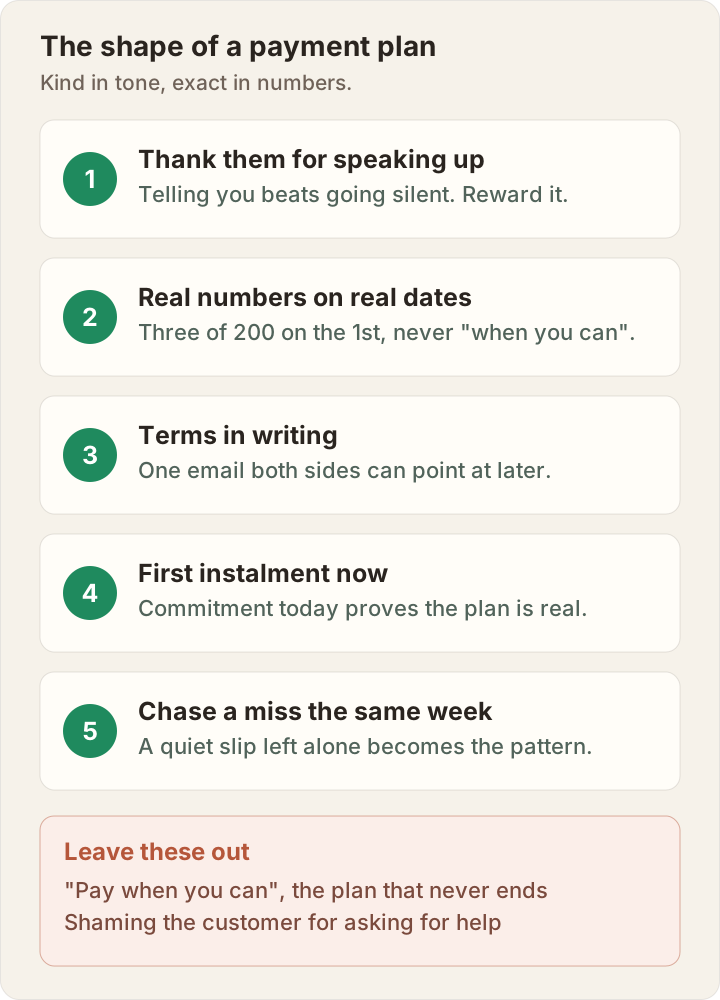
The craft of the payment plan email is holding two registers at once. The tone is warm, because the customer is embarrassed and honesty like theirs should be rewarded, not punished. The numbers are exact, because vagueness is where plans go to die. "Pay what you can, when you can" feels generous in the moment and guarantees months of awkwardness, since no payment is ever technically late. The alternative costs nothing extra in kindness: three instalments of 200, due the 1st of each month, by bank transfer. The customer knows exactly what success looks like. So do you.
Three structural rules do the protecting. Everything in one written email the customer confirms with a reply, letting both sides point at the same terms later. The first instalment lands the day the plan is agreed, even a token one, because payment today is the proof the plan is real, while a plan that starts next month has a way of being renegotiated next month. And a missed instalment gets a friendly nudge the same week, because a slip that passes silently teaches the customer the dates were decorative.
The shape of it
Payment plan templates
Five for the stages the conversation actually moves through. Swap the brackets and keep the numbers exact in every one.
Subject: Re: [their subject], let us sort this together
Hi [name], thank you for telling me straight, genuinely. That is far better than silence and it means we can fix this properly. Here is what I suggest: we split the [total] into [number] payments of [amount], due on the [day] of each month, by [method]. The first one today or tomorrow to get us started, the last on [date] and the balance is cleared. If those amounts do not fit your situation, tell me what does and we will find the shape that works. Reply with a yes to the plan above and I will send confirmation of everything in writing.
[Your name], [business]
Subject: Confirmed: payment plan for [invoice or order number]
Hi [name], confirming what we agreed so we both have it in one place. Outstanding balance: [total]. Payments: [number] of [amount], due on the [day] of each month, starting [date], by [method] to [details]. Once the final payment lands on [date], the balance is settled in full and nothing more is owed. If a payment is going to be late, just tell me before the date and we will manage it. Thanks again for handling this the right way.
[Your name], [business]
Subject: Re: invoice [number], an option that might help
Hi [name], I noticed invoice [number] has been sitting a while, which is unlike you. I wanted to offer something rather than send another reminder. If the timing is the problem, we can split it: [number] payments of [amount] over [period], first one whenever suits this week. No fees, no fuss, it just spreads the load. If the invoice simply slipped the net, ignore all of the above and the usual details are below. Either way, tell me which and we are sorted.
[Your name], [business]
Subject: Re: payment plan for [number], quick check
Hi [name], a gentle one: the instalment of [amount] due on [date] has not arrived yet. No drama, these things slip. I just did not want it to drift without a word between us. Is everything alright and when should I expect it? If [date]s have become difficult, say so and we will adjust the plan once, properly, rather than let it wobble. The details again: [amount] to [method details].
[Your name], [business]
Subject: Paid in full, thank you
Hi [name], the final payment landed today. It is official: the balance is cleared in full and there is nothing more owed. Thank you for seeing the plan through exactly as we agreed, it does not go unnoticed. Receipt attached for your records. It has been a pleasure and we would love to see you again, on whatever terms suit.
[Your name], [business]

When the plan fails
Two missed instalments with no communication means the plan has failed. Pretending otherwise just delays the reckoning. The move is calm and procedural: one email noting the plan was not kept, the full remaining balance is now due and the normal process resumes, which is the reminder ladder from the top. No anger and no lectures, because the paper trail you built, the written plan, the confirmed terms, the documented nudges, is now doing the talking for you, exactly as it was designed to. A failed plan with a clean record is still a far stronger position than months of undocumented patience.
And prevention deserves its sentence: the businesses that need the fewest payment plans are the ones that take deposits, invoice the day the work finishes and nudge before the due date, the whole upstream discipline in the invoice email guide.
The hardest email to get the tone right
Money emails are the ones where tone slips under pressure: too soft and the plan sounds optional, too firm and a loyal customer in a hard month is humiliated. Add that each one needs exact amounts, dates and methods carried over without error. It is no wonder these sit in drafts for days. That is the job ReciteMail does: it learns your voice from emails you have already sent, then turns "offer Sarah a plan, 600 split over three months, first of the month, warm, no shame" into the finished email in seconds, numbers exactly where you said them. It runs on your PC, never connects to your inbox and your customers' money troubles stay on your machine. See who ReciteMail is for.
A payment plan is a loyalty programme in disguise. Anyone can be gracious when the invoices clear on time. The customer you helped through a bad quarter, firmly and kindly, tells that story for years. It wins you more business than the discount you never had to give.
Common questions
Should a small business offer a payment plan to a customer who cannot pay?
Usually yes, because the realistic alternatives are worse. A customer who says they cannot pay in full is offering you information most debtors never volunteer. Refuse and you often collect nothing, chase for months or pay a collector a third of the balance. A structured plan recovers the money slowly and keeps a customer who will remember how they were treated in a hard month. The exceptions are strangers with no history and buyers whose story keeps changing. For them, tighten terms instead.
What should a payment plan agreement include?
Exact numbers on exact dates: the total owed, the instalment amount, the day each is due and the method they pay by. Add what happens if an instalment is missed, whether any late fee applies and when the goods or services resume if you paused them. Put the whole thing in one email the customer confirms with a reply. That written yes turns a friendly conversation into an enforceable arrangement both sides can point at, which protects the relationship rather than threatening it.
Should you ask for the first instalment immediately?
Yes, the first payment lands the day the plan is agreed, even a small one. The point is not the amount, it is the evidence. A customer who pays something today has demonstrated the plan is real and the intent is genuine. A plan that starts next month has a way of being renegotiated next month. Payment today also gives the arrangement momentum: each instalment that lands makes the next one likelier, which is the whole psychology of instalments working in your favour.
What do you do when a customer misses an instalment?
Contact them the same week, warmly and without drama: the instalment due Monday has not landed, is everything alright and when should I expect it? Most misses are hiccups, a delayed wage or a forgotten date. A prompt friendly nudge fixes them. What you must not do is let a miss pass silently, because the customer learns the dates are decorative and the plan quietly dissolves. If two instalments are missed with no communication, the plan has failed and you move back to the normal escalation for unpaid balances.
The money emails, written with steady hands
ReciteMail drafts payment plans, reminders and every delicate customer email in your own voice, learned from mail you have already sent. It runs on your PC, never connects to your inbox and your customers' finances never leave your machine. Free for 7 days, no card needed.
Start your free trial