How to Fire a Client Politely: 6 Templates That Protect Your Name
Published 17 August 2026 · 9 minute read · The ReciteMail Blog
Every business eventually meets the client who costs more than they pay. Not always in money: in Sunday-night dread, in scope that creeps weekly, in invoices chased for months, in the way your best people flinch when the name appears in the inbox. Ending it feels dangerous. So most owners endure it for a year longer than they should. Here is how to do it cleanly: the signs it is genuinely time, what to check before you send anything, the five-step order that keeps it civil, plus six copy-paste templates from the first warning to the final handover.
How to know it is genuinely time
One bad month is not a firing offence. A pattern is. The signs that reliably justify ending it: invoices that are late every single cycle rather than occasionally, meaning you have become their unpaid credit line. Scope that grows every week while the fee stands still. Rudeness to you or your staff that survives being named. Work they demand in a way that stops you serving the clients who pay properly. And the quiet one owners ignore longest: when you price up the real hours against the real fee and find the account loses money, then a polite goodbye is not a luxury. It is arithmetic.
Two checks before you act. First, is it the client or is it the deal? A decent person on a fee that no longer works is a pricing conversation, covered in the price increase guide, not a firing. Second, have you actually told them? People are rarely fired well by surprise. A named problem with a fair chance to fix it comes first, both because it is decent and because sometimes it works.

Before you send anything
- Reread the contract. Notice period, termination clauses, what happens to deposits and prepaid work. The polite goodbye that breaches your own agreement stops being polite in a hurry.
- Collect the money first, where you can. An ex-client's enthusiasm for settling old invoices drops the moment you resign the account. If they owe you, chase it to done before you announce, using the reminder ladder if needed.
- Pick a clean break point. The end of a project phase, a billing cycle or a season. Firing a client mid-crisis on their side reads as abandonment even when justified and it is the version that gets retold.
- Decide your handover offer. What you will finish, what you will transfer and by when. Generosity here is cheap insurance: the handover is the part they remember and repeat to other people in your market.
Firing a client, in order
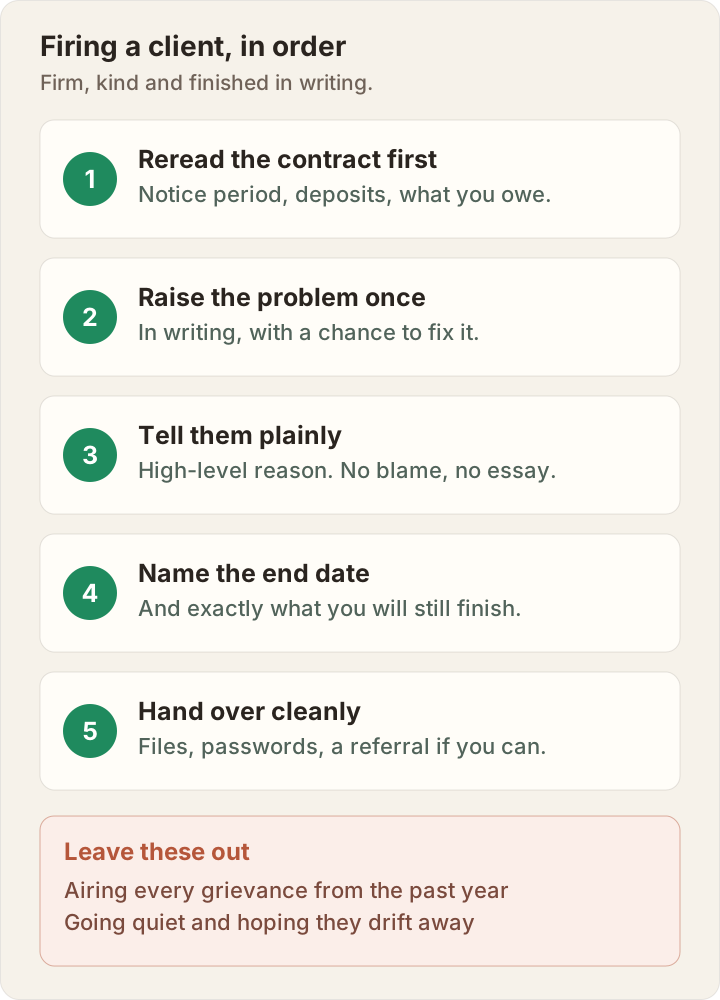
- Warn once, in writing. Name the problem, name the fix, give a real deadline. If it changes, you keep a client. If it does not, your exit is documented and fair.
- Tell them plainly, without blame. One high-level reason. "Our ways of working no longer fit" ends the matter. A list of grievances opens a debate about each one.
- Name the end date and the boundary. What you will still finish, what you will not start. Vagueness here is how goodbyes drag on for two more quarters.
- Hand over cleanly. Files, credentials, status notes, a referral where you honestly can. This is the paragraph that protects your reputation.
- Then hold the line. Expect a counter-offer, an apology tour or anger. Reply once, kindly, repeating the decision and the plan. The second wobble is where most firings fail.
Client goodbye templates
Six templates covering the whole arc. Swap the brackets, keep the reason at one sentence and resist every urge to relitigate history. Calm and short reads as strength. Long reads as guilt.
Subject: Making this work going forward
Hi [name], I want to raise something directly rather than let it fester. [The problem, plainly: the last four invoices have each taken over sixty days / the scope has grown well past what we agreed / the tone in recent calls has been hard on my team.] For this to keep working, I need [the specific fix] from [date]. I am raising it because I would rather fix this than end a relationship we have put real work into. Can you confirm this works by [deadline]?
[Your name], [business]
Subject: A change to how we work together
Hi [name], I have reviewed how this account has run over [period] and the honest position is that the current arrangement no longer works on our side. To continue from [date], the terms would need to be: [the new terms, e.g. the revised fee / payment in advance / a defined monthly scope]. I understand if that does not fit your plans and I will help you transition either way. Could you let me know by [date] which way you would like to go?
[Your name], [business]
Subject: Our work together, ending [date]
Hi [name], after a lot of thought I have decided we are not the right fit to keep working together and we will be ending our engagement on [date], in line with the notice in our agreement. This comes down to [one high-level reason: our ways of working no longer fit / we are narrowing the kind of work we take on]. Between now and then we will finish [the committed work] to the usual standard. By [date] you will have [files, credentials, handover notes] and I am glad to brief whoever takes over. Thank you for the trust you have placed in us. I genuinely wish you and the business well.
[Your name], [business]
Subject: Ending our engagement, effective [date]
Hi [name], following my note of [date] about [the problem], which has not been resolved, we are ending our engagement effective [date] as our agreement provides. Outstanding at close: [invoice numbers and total], due by [date]. Completed work and files will be released [on payment / by date, per your contract terms]. This is not the outcome I wanted and it is not a reflection on [something true and gracious, if one exists]. I would rather part on clear terms than continue on broken ones.
[Your name], [business]
Subject: A better home for your [work type]
Hi [name], I have come to the conclusion that we are no longer the best team for what you need. Your [work type] has grown toward [what they need], which is not where we do our best work. You deserve a supplier who is excellent at exactly that. [Referral name] at [firm] handles this well and I am happy to introduce you. We will finish [committed work] by [date] and hand everything over in good order. Working with you has taught us a lot and I would like to end this the same way it ran: properly.
[Your name], [business]
Subject: Re: [their subject]
Hi [name], thank you for the reply and for the kind words about the work. I did not make this decision quickly and it is final. The fairest thing I can do is not reopen it. What I can promise is the exit done properly: [the handover plan, restated] by [date]. I meant what I said about wishing you well and this is me making sure the last thing we do together is done right.
[Your name], [business]

After you press send
Three responses arrive, sometimes all from the same client. The counter-offer: decide before you send whether any terms could keep you and what they are. That way the answer is ready and identical every time it is asked. The guilt trip: sympathy is fine, reversal is not, because staying out of guilt replays the entire cycle with less goodwill on both sides. The flash of anger: do not match it. One calm reply restating the plan, then let the handover speak. Every message in this stretch should assume it will one day be read by someone you have never met, because in small industries it will be. The wider craft of saying no without making an enemy is covered in the saying-no guide.
The email you draft eleven times
Owners tolerate a draining client for an extra year and the reason is usually not strategy. It is that the goodbye email is horrible to write. Too harsh, too soft, too long, delete, start again, close the laptop, endure another quarter. The message that costs the most money in your business is the one sitting unwritten.
That is where ReciteMail earns its keep. It learns your voice from emails you have already sent, then turns a one-line note like "end it with Redline Motors, 30 days notice, we finish the rebrand, invoices 214 and 220 still due, keep it warm" into a complete, firm, kind goodbye that sounds like you on your best day. The warning shot, the reset offer and the calm reply to the pushback take a minute each instead of an evening. And because it runs on your own machine and never connects to any mailbox, the most sensitive email of your quarter is drafted in the most private place possible: your own PC.
Agencies, accountants, trades and freelancers all carry one client too many. The warning, the reset, the goodbye and the hold-the-line reply are four of the hardest emails in business and every one of them repeats. ReciteMail drafts them in your voice, private by architecture because it never connects to a mailbox. See who ReciteMail is for.
Common questions
Do you have to give a reason when you fire a client?
You owe them clarity, not a case file. One high-level, honest sentence is right: our ways of working no longer fit, we are narrowing what we take on or the commercial terms no longer work for us. Itemising every grievance invites a rebuttal of each item and turns a decision into a negotiation. State the decision, keep the reason short and true, then move to the practical handover.
Should you fire a client by email or by phone?
For a long or valuable relationship, a short call first is kinder and lands better, followed immediately by an email confirming what was said. For a newer or transactional client, a well-written email alone is fine. Either way the email must exist: the end date, what you will finish and the handover plan need to be in writing so nobody remembers the conversation differently later.
What if the client still owes you money?
Collect before you announce, where you can. A fired client's motivation to pay an old invoice drops sharply. If the debt is the reason you are ending it, make continuing conditional first: work pauses until the account is settled. If they pay, you can still exit cleanly afterwards. If they do not, the non-payment becomes the plain, documented reason and you end it with the invoice attached and a final due date.
What do you do when a fired client asks you to stay?
Decide before you send the email whether any offer could change your mind and what it would have to be. If nothing could, say so kindly and once: the decision is made and it is final. Then repeat the handover plan. If a genuinely changed arrangement would work, name your exact terms in writing, once, with a deadline. What ruins exits is drifting back for the same relationship at the same terms out of guilt, which replays the whole cycle with less goodwill on both sides.
The hardest emails, written in your voice
ReciteMail drafts client goodbyes, warnings and every other email you dread in your own voice, learned from mail you have already sent. It runs on your PC, never connects to your inbox and your client history never leaves your machine. Free for 7 days, no card needed.
Start your free trial