How to Reply to Influencer and Collaboration Requests: 7 Templates for Small Brands
Published 9 September 2026 · 8 minute read · The ReciteMail Blog
If you run a fashion, beauty or consumer brand, the "I would love to collab" email is in your inbox right now. Probably three of them. One is from a creator with 400 followers, one from a creator with 400,000 and one from an account that wants you to buy your own product back for the privilege. Most brands either ignore all of them or send free stock to anyone who asks. Both cost money. The reply is a brand moment: the person reading it is a customer, a fan or a future partner. They will screenshot a rude one. Here is the shape that keeps replies quick and kind, the two habits that quietly drain stock. Then seven templates you can send this afternoon.
Why the collab reply is a brand moment, not admin
A creator who emails a small brand is usually a customer first. They found you, they liked you enough to write. Whatever you send back is the closest look they will ever get at how the brand treats people. A warm no keeps a buyer. Silence loses one and sometimes earns a story about it. A yes with no terms turns a fan into someone who expected free product and posted nothing.
The numbers also matter more than they look. A brand that gifts a product worth 40 to everyone who asks, four times a week, has given away over 8,000 a year in stock, most of it to accounts that never posted. The reply is where that leak gets closed. It costs nothing to close it kindly.

The shape of a collab reply
Every good version runs the same four moves, whether it is a no, a gift or the start of a paid partnership.
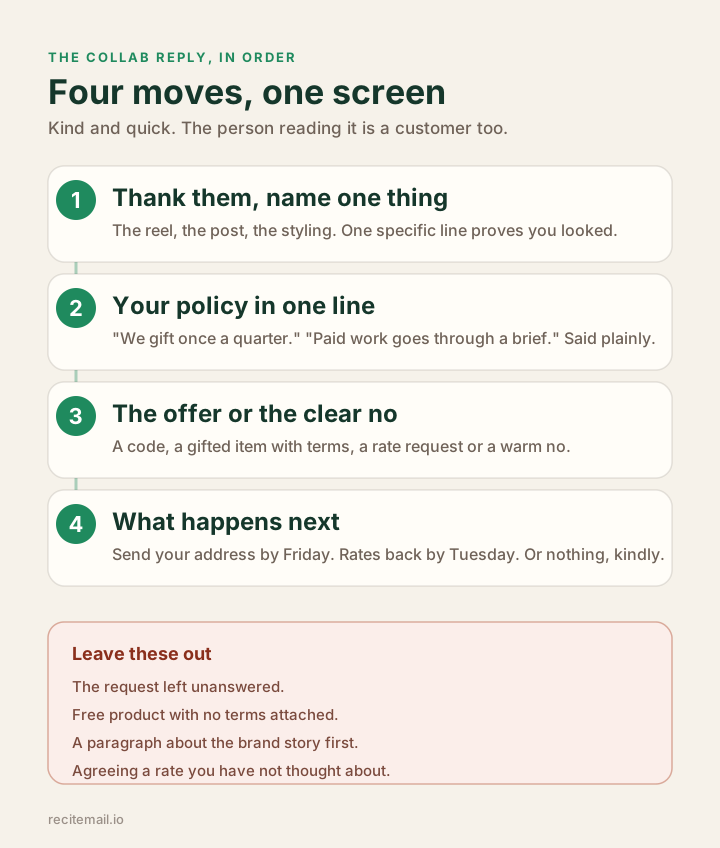
- Thank them and name one specific thing. The reel where they styled the linen shirt, the post about their skincare routine, the way they photograph flat lays. One line. It proves a person looked. It costs thirty seconds on their profile.
- State your policy in one line. "We gift a small number of pieces each quarter." "Paid partnerships go through a short brief and a rate card." "We are not taking on new partners this season." Plain, calm, no apology. A policy said clearly is easier to hear than a maybe.
- Make the concrete offer or the clear no. A discount code for their audience, a gifted item with what you would like in return, a request for their rates and reach or a warm no with the door left open. Never a vague "let us stay in touch" that means nothing to either side.
- Say what happens next. Send your address by Friday. Rates and audience numbers back by Tuesday. Or nothing further, said kindly. The reply should end with both sides knowing exactly what is or is not going to happen.
The two habits that quietly cost small brands stock
- Gifting with no terms. Product goes out because saying no felt awkward, nothing was agreed about what comes back. The post never appears. Gifting is fine. Gifting without "one post and one story within two weeks, tagged and we may reshare" is a donation. Put the terms in the email, in one friendly sentence, every time.
- Ignoring the small accounts. A creator with 600 followers who genuinely uses your product is worth more than a creator with 60,000 who takes anything free. Small accounts have higher trust and they become customers, repeat customers and sometimes big accounts. A no to them still deserves a real reply. A discount code for their audience often turns a no into a sale.

Influencer and collaboration request templates
Seven templates for the collab emails that actually arrive. Swap the brackets, keep the terms specific and keep the tone of a brand that likes its customers, not a company defending a budget.
Subject: Re: Collaboration with [brand]
Hi [name], thank you for the message and for [one specific thing, e.g. the reel with the green jacket, the styling was lovely]. We are not taking on new partnerships this season. I cannot offer anything right now and I would rather say that plainly than leave you waiting. If that changes I will come back to you. If you ever want to try something from the range, [code] gives you [discount] at checkout. Thank you again for thinking of us.
[Your name], [brand]
Subject: Re: Collaboration with [brand]
Hi [name], thank you for getting in touch, [one specific thing, e.g. your feed has exactly the calm feel we go for]. We gift a small number of pieces each quarter and I would be glad to send you [item]. In return we ask for one post and one story within two weeks of it arriving, tagged @[handle]. We may reshare your content with credit. There is no fee either way and no obligation beyond that. If that works, send me your address and size by [day] and it will go out [when].
[Your name], [brand]
Subject: Re: Paid partnership with [brand]
Hi [name], thank you for the pitch, [one specific thing]. We do run a small number of paid partnerships and each one goes through a short brief so both sides know what is being made. Before I can say yes or no, could you send your rate card, your audience numbers for the last 30 days and two examples of brand work you are proud of? I will come back to you by [day] with either a brief or an honest no. Either way, thank you for putting a proper proposal together.
[Your name], [brand]
Subject: Re: Collaboration with [brand]
Hi [name], thanks for the message, [one specific thing]. We are not gifting at the moment but I can set you up with your own code: [CODE] gives your audience [discount] and you earn [percentage] on every order that uses it, paid [monthly / at the end of each month]. No minimums, no obligations. You keep it as long as you like. If you would like it, reply with the code name you would prefer and I will have it live by [day].
[Your name], [brand]
Subject: Re: Collaboration with [brand]
Hi [name], thanks for reaching out. To look at this properly I need a little more than the message gives me: your media kit or a link to your channel, your audience numbers and what you had in mind, gifted, paid or affiliate. Once I have that I will give you a straight answer by [day]. We get a lot of these and we do read them, which is why I would rather ask than guess.
[Your name], [brand]
Subject: Re: Brand ambassador opportunity
Hi [name], thank you for the message. We do not take part in programmes where the brand buys product or pays a fee to be featured. This is not something we will go ahead with. If you are a creator who uses our products and would like to talk about an affiliate code or gifting on our usual terms, I am glad to hear from you. Otherwise all the best with it.
[Your name], [brand]
Subject: [Brand] x [name], let us do it
Hi [name], I would love to work together, [one specific thing]. Here is the brief in plain words so nothing gets lost. Product: [item], sent by [day]. Content: [one reel and two stories / whatever], tagged @[handle], posted between [date] and [date]. Fee: [amount], paid [when, e.g. within 14 days of the last post] against your invoice. Usage: we may reshare on our channels with credit, nothing else without asking you. If that all reads right, reply with your address and I will send a one page agreement to sign. Looking forward to seeing what you make.
[Your name], [brand]
Where the good ones come from
Every one of these replies gets easier when three things are written down: your gifting and partnership policy in two lines, the codes and rates you are willing to offer and the way the founder says no without sounding like a form. Most small brands keep all three in one person's head. Our guide on how to say no in an email covers the warm refusal in more depth. how to ask customers for reviews is the other side of the same coin: turning happy buyers into people who post about you without a gifting budget.
The ninth collab email this week
One kind, specific no is easy. The ninth one this week, after packing orders all afternoon, with a real line about their content and the code spelled right, is the hard part. That is when messages get ignored or free product goes out to end the conversation, not because anyone stopped caring but because writing the same thing well nine times is not what a founder has left at six o'clock.
That is the job ReciteMail does. It learns how your brand writes from emails you have already sent, then turns a line like "no partnerships this season, loved the green jacket reel, give her the 15 code" into a full reply that sounds like you on your best day. Every draft is read and sent by a person. It runs on your own PC, never connects to your inbox and nothing sends without you. Customer details stay exactly where they are.
A brand inbox runs on the same twelve emails. Collab requests, where is my order, returns, wholesale enquiries and the review ask. ReciteMail drafts all of them in your voice, private by architecture because it never connects to your inbox. See ReciteMail for online stores.
Common questions
Should a small brand reply to every influencer request?
Yes, even with a two line no. The person writing is usually a customer or a fan. How you treat them is the closest look they get at the brand. Ignoring requests loses buyers and occasionally produces a public story about it. A polite no with a discount code costs a minute and often turns into an order.
How do you say no to an influencer without being rude?
Thank them, name one specific thing you liked about their content, state your policy plainly in one line, then give a small something if you can, such as a code for their audience. Do not apologise repeatedly and do not leave a vague "let us stay in touch". A clear kind no is easier to receive than a maybe that never turns into anything.
What terms should you attach to gifted product?
What you send, what you would like back, by when and what you may do with the content. A typical line: one post and one story within two weeks of arrival, tagged and the brand may reshare with credit. Say there is no fee and no obligation beyond that. Gifting with no terms is not a partnership, it is a donation. The post usually never appears.
How do you spot a fake collaboration request?
The brand is asked to pay: to buy product to be featured, to pay a listing fee, to send items to a warehouse address that is not the creator or to sign up for a "brand ambassador programme" with a cost attached. Real creators ask you for product, a code or a fee for their work. Anyone asking for money from the brand first gets a short no and no further conversation.
Every collab reply, kind and specific on the first draft
ReciteMail drafts the polite no, the gifting offer, the partnership counter and every other brand reply in your own voice, learned from mail you have already sent. It runs on your PC, never connects to your inbox and customer details never leave your machine. Free for 7 days, no card needed.
Start your free trial