How to Confirm a Verbal Agreement by Email
Published 6 October 2026 · 5 minute read · The ReciteMail Blog
You agreed it on the phone. The price went up by 400 for the extra work, the start moved to the 3rd, they will pay half now and half on completion. Everyone was happy. By Friday the customer remembers 300, the 10th and nothing up front. Nobody is lying. Memory just does that to conversations about money and dates. A confirmation email sent within the hour stops it. It takes five lines.
Why it has to be written down
A phone call has no record. On site, both of you were half thinking about something else. The agreement exists in two heads and the two versions start drifting the moment the call ends. The confirmation email does not replace the conversation. It freezes it. Months later, if there is a disagreement, the email is what both sides go back to. And most of the time there is no disagreement precisely because the email exists.
It also catches genuine misunderstandings early. If you write "half now, half on completion" and they reply "I thought it was on completion", you have found that out on Tuesday rather than on the day you ask for the money.
The five lines
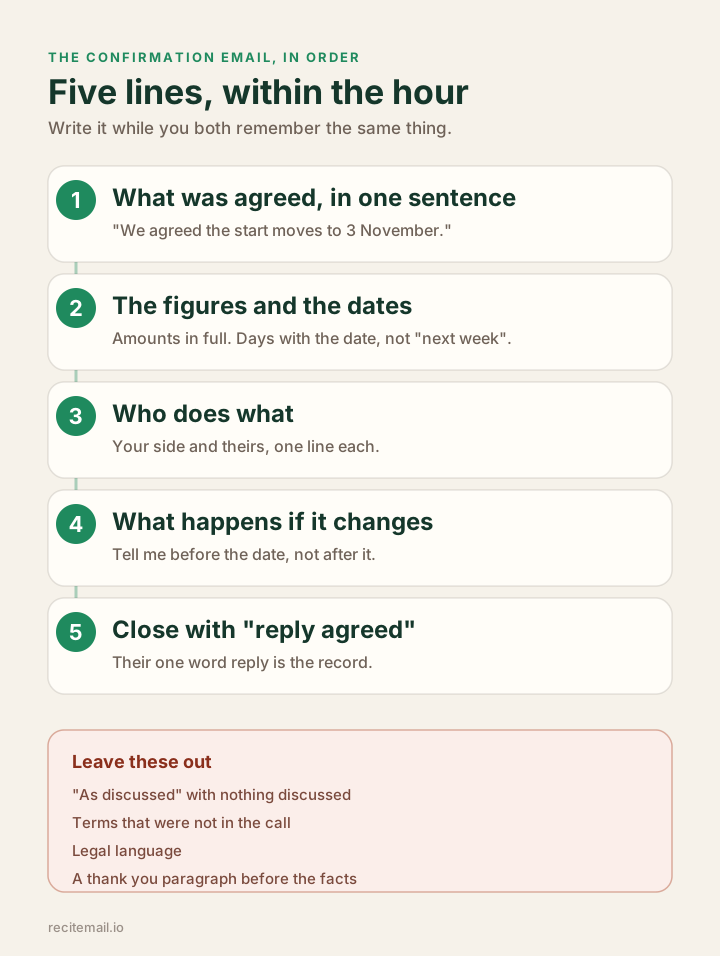
- What was agreed, in one sentence. "Confirming what we agreed on the phone this morning: the start date moves to Monday 3 November." Not "as discussed", which assumes they remember.
- The figures and the dates. Every amount in full. Every day with its date, never "next week" or "the end of the month".
- Who does what. Your side and theirs. "You will clear the garage by the 2nd. We will have the skip delivered on the 3rd."
- What happens if it changes. One line. "If the 3rd becomes a problem, tell me before the 30th so I can move the skip."
- Close with "reply agreed". Their one word reply is the record. Without the ask, silence is all you get and silence proves nothing.
That is the whole email. No thank you paragraph before the facts, no legal language and nothing that was not in the call. If you want to add a term you forgot to raise, say so plainly: "One thing I should have mentioned on the phone" and then ask, rather than slipping it in as if it were agreed.

Three examples
Subject: Confirming the extra work at 22 Elm Road
Hi Dara, confirming what we agreed on site this morning. The rotten joists under the bathroom floor will be replaced as part of the job at an extra 400.00, bringing the total to 6,150.00. I will order the timber today and it adds one day to the schedule. Completion moves from Friday 6 to Monday 9 November. Nothing changes on the payment terms. If anything here is not what you understood, tell me today. Otherwise reply "agreed" and I will crack on.
Best regards,
Rob
Subject: New delivery date, order 4471
Hi Amara, confirming our call just now. Your order 4471 will now be delivered on Thursday 15 October instead of Friday 9 October, because the oak frames are coming in a week late from the maker. You said Thursday works as long as it is before 2pm. I have booked the morning slot. If the Thursday stops working for you, let me know by Monday and I can offer the following Tuesday. Reply "agreed" if that is all correct.
Best regards,
Leah
Subject: Payment plan for invoice 2041
Hi Marcus, confirming what we agreed on the phone this afternoon. Invoice 2041 for 950.00 will be paid in two parts: 475.00 by Friday 9 October and 475.00 by Friday 23 October. On receipt of the first payment I will restart work on the VAT return. If either date becomes a problem, tell me before it rather than after. Please reply "agreed" so we both have it in writing.
Best regards,
Dan
The payment example is the full version of what our guide to payment plan emails describes. For the on-site price change, our guide to telling a customer the job will cost more covers the conversation that comes before the confirmation.
When to send it
Within the hour. Same day at the latest. The further it gets from the conversation, the more the email reads as your version rather than the shared one. They are then more likely to reply with corrections instead of "agreed". If you are on site with no laptop, a two line text that says "confirming 400 extra and completion Monday 9th, full email tonight" holds the position until you can write it properly.
If they reply with something different
Good. That is the email doing its job. Do not argue by email. Phone them, settle it in two minutes and send a second confirmation with the settled version. The one thing not to do is let a disputed confirmation sit unanswered, because an email that was never agreed to proves nothing either way.
Writing it before you forget
The confirmation does not get sent because the call ends and the next thing starts. By the evening the figures are fuzzy and the email feels like work. This is what ReciteMail is for. The moment the call ends, say what was agreed as you remember it: "Confirm with Dara, joists replaced, extra 400, total 6,150, completion moves to Monday the 9th, payment terms unchanged, reply agreed." The email comes back in your own words with the figures and the dates in place. Read it, paste it, send it. Under a minute, while it is all still true. It runs on your PC, never connects to your inbox and nothing sends without you. This 40 second video shows how it works.
If it is not written down, it was not agreed. Five lines within the hour, closed with "reply agreed". The conversation stays the same in both heads. ReciteMail drafts it from a few spoken notes the moment you hang up. See who it is for.
Common questions
How do you confirm a verbal agreement in writing?
Send an email the same day that states what was agreed in one sentence, lists every figure and date, says who does what, says what happens if something changes and asks the other person to reply "agreed". Their reply is the record.
Is an email confirming a verbal agreement legally binding?
In many places a clear email exchange can form or evidence a contract. The rules vary by country and by what is being agreed. Treat the confirmation as a record of what both sides understood rather than a legal document. For anything large, use a proper written contract and take advice.
What should you write instead of "as discussed"?
Say what was discussed. "Confirming what we agreed on the phone this morning: the start date moves to 3 November." The phrase "as discussed" assumes the reader remembers the same thing you do, which is the problem the email exists to solve.
How soon after a phone call should you send a confirmation email?
Within the hour if you can. The same day at the latest. The longer the gap, the more the email reads as one person's version of events and the more likely the other person is to reply with a different recollection.
The confirmation, sent before the next call starts
Say what was agreed the moment you hang up and ReciteMail writes the confirmation in your own voice with the figures and dates in it. It learns from mail you have already sent, runs on your PC and never connects to your inbox. Free for 7 days, no card needed.
Start your free trial