Rent Increase Letter to Tenant: 5 Templates + Notice Periods
Published 15 August 2026 · 8 minute read · The ReciteMail Blog
Raising the rent is the email landlords put off longest. Send it badly and a good tenant starts browsing listings the same evening. Yet the maths is stark: a void month plus re-letting fees plus the gamble of a new tenant usually costs more than the increase was ever worth. The goal is not just a lawful notice. It is a letter that a fair tenant reads and accepts. Here is the order to do it in, the notice rules to check, plus five copy-paste rent increase letters.
The letter is the last step, not the first
Most rent increase disputes are not about the wording. They are about an increase that was unlawful, unserved or indefensible before the first sentence was written. Do the homework in this order and the letter almost writes itself.
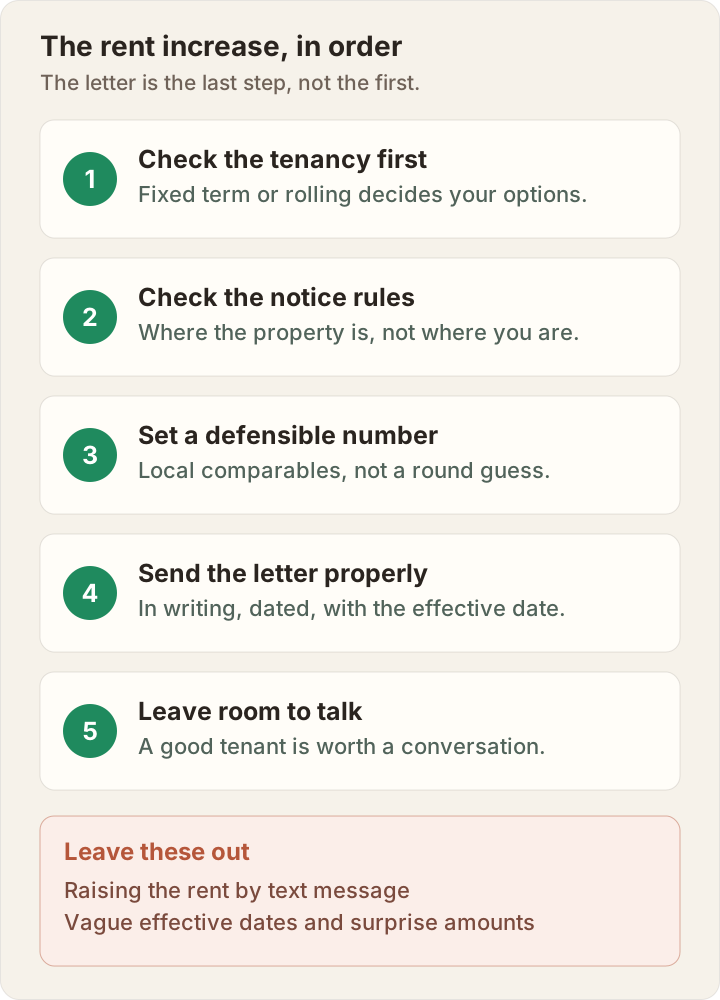
- Check the tenancy first. A fixed term generally locks the rent until it ends unless the agreement has a rent review clause. A periodic or rolling tenancy is where notice-based increases live. Read the agreement before anything else.
- Check the notice rules where the property is. Not where you live, where the property sits. The next section covers the common frameworks.
- Set a defensible number. Pull three comparable local listings and price against them. A number backed by comparables survives a tribunal, a negotiation and a tenant's own search. A round guess does not.
- Send it properly. In writing, dated, with the old rent, the new rent and the exact effective date. Some places require a specific statutory form, which an email alone does not satisfy.
- Leave room to talk. One line inviting questions costs nothing and catches the tenant who was one surprise away from leaving.
Notice periods: the short version
The rules move often. Treat this as a map rather than legal advice and check the current official guidance where the property is before you send anything.
- England. Increases on periodic tenancies go through the statutory notice route and have long required at least a month. Recent reform extends notice requirements. Check the current government guidance for the form and period that apply when you send.
- Ireland. At least 90 days of written notice, with Rent Pressure Zone rules capping how much and how often. The RTB publishes the current requirements and the notice must include prescribed information.
- United States. Most states require 30 to 60 days for month-to-month tenancies and rent-stabilised cities add caps on the amount. State and city rules vary widely. Check both.
- Everywhere. Whatever the legal minimum, more notice than the minimum is the cheapest goodwill you can buy. A tenant given three months to plan rarely feels ambushed.

Rent increase letter templates
Five letters for the situations that actually come up. Swap the brackets, keep the dates exact and attach or reference the statutory form where your jurisdiction requires one. Every template states the old rent, the new rent and the effective date, because a letter missing any of the three invites a dispute.
Subject: Notice of rent adjustment, [property address]
Dear [name], I am writing to give you notice that the rent for [address] will change from [old amount] to [new amount] per [month/week], effective [date]. This gives [X weeks/months] of notice, in line with [the tenancy agreement / local requirements]. The adjustment reflects [one honest line: current market rents in the area / increased costs]. Everything else about your tenancy stays exactly as it is. If you would like to talk it through, call or reply any time. Thank you for looking after the place so well.
Best regards, [Your name]
Subject: Your tenancy renewal, [property address]
Dear [name], your current tenancy ends on [date] and I would genuinely like you to stay. For the new term the rent will be [new amount] per month, up from [old amount]. I have based this on what similar properties nearby are letting for and kept it under that mark because a good tenant is worth more to me than the last euro of rent. If you are happy to renew, I will send the paperwork this week. If you want to discuss it first, I am glad to.
Best regards, [Your name]
Subject: Rent review, [property address]
Dear [name], you have been a brilliant tenant for [X years] and I want to be straight with you about the numbers. Similar flats in the building are now letting for around [market amount]. Your rent is [old amount]. I am not going to close that whole gap: from [date] the rent will be [new amount], which keeps you comfortably below the going rate. I would rather keep a tenant I trust at a fair discount than chase the full market with a stranger. Any questions, just ask.
Best regards, [Your name]
Subject: Notice of rent adjustment, [property address]
Dear [name], now that the [new boiler / renovated bathroom / insulation work] is finished, I am writing to give notice that the rent will change from [old amount] to [new amount], effective [date], which is [X weeks/months] from today. The increase reflects part of the cost of the work rather than all of it, since the point of the upgrade was to make the place better to live in, not just dearer. I hope the difference is already noticeable. Happy to talk any time.
Best regards, [Your name]
Subject: Re: [their subject]
Dear [name], thank you for coming back to me rather than just handing in notice, I appreciate it. Here is how I set the number: [the comparables, briefly]. I hear you on [their main point] and here is what I can do: [the movement you can offer, e.g. phasing it over two dates / settling at a midpoint / holding it in exchange for a longer term]. What I cannot do is hold the current rent indefinitely, because [one honest line]. Have a think and let me know by [date]. Whatever you decide, I have valued having you as a tenant.
Best regards, [Your name]
The tone that keeps good tenants
Every template above follows the same rules. State the number and the date plainly rather than hiding them in paragraph three. Give one honest reason without writing an essay about the economy. Never apologise your way through it, because an over-apologised increase reads as negotiable from the first line. And always end with the door open, because the conversation you invite is the dispute you avoid. The same calm carries the harder moments of lettings too, like replying to an angry tenant or chasing late rent.

Twelve properties, twelve versions of this letter
One rent increase letter is manageable. A portfolio's worth is where the tone slips: the fifth letter of the afternoon comes out colder than the first and the tenant who gets it has no idea it was letter five. The same slippage shows up across all landlord email, which is why property management templates only get you halfway. The template gives you the skeleton. The tenant still hears the tone.
That is the job ReciteMail does. It learns how you write from emails you have already sent, then turns a one-line note like "rent increase for 14 Elm, 1150 to 1225 from 1 December, she has been there four years, keep it warm" into a letter that sounds like you at your most considered. Letter five gets the same warmth as letter one. And because it runs on your own machine with no connection to any mailbox, tenant names and addresses never leave your desk.
Landlords and letting agents run their whole inbox this way. Rent reviews, arrears chasing, maintenance updates and tenancy paperwork are the same twenty emails at volume, each one needing to sound like a person rather than a portal. ReciteMail drafts all of them in your voice, private by architecture because it never connects to a mailbox.
Common questions
How much notice do I need to give for a rent increase?
It depends on where the property is. In England a periodic tenancy increase has long required at least a month of notice through the proper form and recent reform extends this. Check current government guidance before sending. In Ireland it is at least 90 days in writing, with Rent Pressure Zone caps on the amount. In the US most states require 30 to 60 days for month-to-month tenancies. Whatever the legal minimum, more notice than the minimum is the cheapest goodwill you can buy.
Can a tenant refuse a rent increase?
During a fixed term, yes, unless the agreement contains a rent review clause: the agreed rent stands until the term ends. On a periodic or rolling tenancy a tenant can negotiate or challenge an increase through the local tribunal or rent authority if they believe it is above market or unlawful. They can also give notice and leave. A properly served increase that follows local rules and sits at market level is usually upheld, which is why the homework matters more than the wording.
How much can I increase the rent by?
Where caps exist they win: Rent Pressure Zones in Ireland, rent stabilisation in some US cities and similar schemes elsewhere set hard limits. Check those first. Where there is no cap the practical ceiling is the local market. Pull three comparable listings and price against them. A defensible number backed by comparables survives a tribunal and a conversation. A round number pulled from hope does neither.
Should I explain the reason for a rent increase?
Yes, briefly. One or two honest lines about rising costs, works completed or the gap to market rent turn a demand into a decision the tenant can understand. Skip the essay and never apologise your way through it, because an over-apologised increase invites negotiation of the whole number rather than acceptance. State it, explain it in one line and offer to talk.
Letter five, as warm as letter one
ReciteMail drafts rent reviews, arrears reminders and every tenant email in your own voice, learned from mail you have already sent. It runs on your PC, never connects to your inbox and tenant details never leave your machine. Free for 7 days, no card needed.
Start your free trial